Size a commercial solar system and see the payback in under a minute.
A free, engineer-grade calculator for UK businesses. Find your building and we'll measure the roof from the latest aerial survey: system size, generation, savings, payback, IRR, CO₂ and every funding route compared side by side.
Find your building. We’ll do the rest.
No long form — we measure your roof from the latest aerial survey and size the system for you. Every assumption stays editable once your figures are open.
Your system size
Your year-one saving
Your payback
A proposal to share
No obligation — just your name and work email to see your figures.
Select your business
Search your site, then centre the map on your building.









The numbers come with a board-ready proposal.
Every estimate packages into a branded, shareable proposal — summary, a full 25-year cashflow and all three funding routes side by side. Here's a peek; the figures fill in the moment you generate yours.
| Buy outright | Asset finance | EaaS | |
|---|---|---|---|
| Upfront | |||
| Year-1 saving | |||
| Payback | |||
| 25-yr saving | |||
| IRR |
This just packages your figures into a private proposal link to keep and share — free, no obligation.
Most solar calculators are built for houses. This one is built for a business case.
A commercial decision turns on payback, IRR, cashflow and balance-sheet treatment — not just panels on a roof. Here's what makes this different.
Sized to your demand, not your roof
Domestic calculators just fill your roof with panels. A commercial system is sized against your half-hourly consumption so you self-consume the most valuable kWh — the difference between a 5-year and a 9-year payback.
Modelled, not a rule of thumb
Every figure is modelled from postcode irradiance, degradation, inflation, tax relief and four funding models — not a flat £/kWp guess.
Four funding routes explained
Buy outright, asset finance, PPA and fully-maintained Energy-as-a-Service — laid out side by side, so the finance conversation starts with numbers instead of a sales call.
Honest and footnoted
Every output is labelled indicative and nothing is a quote. The precise numbers come from a free feasibility survey and half-hourly data audit — measured on your site, not assumed.
Three inputs. A full 25-year picture.
- 01
Your building
Site address (its postcode sets your local solar irradiance), industry, roughly how much roof you have and its type. That's enough to size an array.
- 02
Your energy
Your electricity spend or usage — or let it estimate from your building type — plus your unit price and when you use most power. This anchors the sizing to real demand, not just roof area.
- 03
Your goals
What matters most (cost, net zero, resilience, EV) and any funding preference. The engine then models the funding routes and returns a full 25-year picture.
Every figure, in plain English — and exactly how it's worked out.
No black box. Here's what each output on the calculator actually is, how the engine derives it, and why it matters to a finance team.
Tap any figure to see how it's worked out.
The four ways to fund it — and who each one suits.
We model all four so you can compare like for like. Here's what each means in practice — or go deeper on how each route is funded.
Buy outright (CapEx)
Strongest returnYou fund the system, keep 100% of the savings and — where eligible — claim full-expensing corporation-tax relief up front. The highest IRR and shortest payback of the four routes.
- Upfront
- Full capital
- Balance sheet
- On balance sheet
- Ownership
- You own it from day one
- Best for
- Businesses with capital available that want maximum lifetime return.
Asset finance
Spread the costSpread the capital over a fixed term at a set APR and pay from the savings the system generates. You still claim the tax relief and own the asset outright at the end.
- Upfront
- £0–deposit
- Balance sheet
- On balance sheet
- Ownership
- You own it (financed, own outright at end of term)
- Best for
- Businesses that want ownership but would rather preserve working capital.
PPA (Power Purchase Agreement)
Zero upfrontA funder pays for and owns the system on your roof. You simply buy the solar electricity you use at a rate below grid price, saving from day one with nothing on your balance sheet.
- Upfront
- £0
- Balance sheet
- Off balance sheet (opex)
- Ownership
- A funder owns the system
- Best for
- Sites that want savings with no capital outlay and no ownership responsibilities.
Energy-as-a-Service
Fully funded · fully maintainedWe fund, build, operate AND maintain the whole system for one fixed annual fee — structured to save from year one. All servicing, monitoring, repairs and maintenance are included for the life of the contract: nothing else to pay, nothing to manage. At the end of the term the asset transfers to you and the full savings are yours.
- Upfront
- £0 — all maintenance included
- Balance sheet
- Off balance sheet (opex)
- Ownership
- A funder owns it, then transfers it to you
- Best for
- Organisations that want a completely hands-off system — funded, operated and maintained — with eventual ownership.
Funding routes, side by side.
| Feature | Buy outright (CapEx) Most popular | Asset finance | PPA (Power Purchase Agreement) | Energy-as-a-Service |
|---|---|---|---|---|
| Upfront cost | Full capital | £0–deposit | £0 | £0 — all maintenance included |
| Who owns it | You own it from day one | You own it (financed, own outright at end of term) | A funder owns the system | A funder owns it, then transfers it to you |
| Balance sheet | On balance sheet | On balance sheet | Off balance sheet (opex) | Off balance sheet (opex) |
| Best for | Businesses with capital available that want maximum lifetime return. | Businesses that want ownership but would rather preserve working capital. | Sites that want savings with no capital outlay and no ownership responsibilities. | Organisations that want a completely hands-off system — funded, operated and maintained — with eventual ownership. |
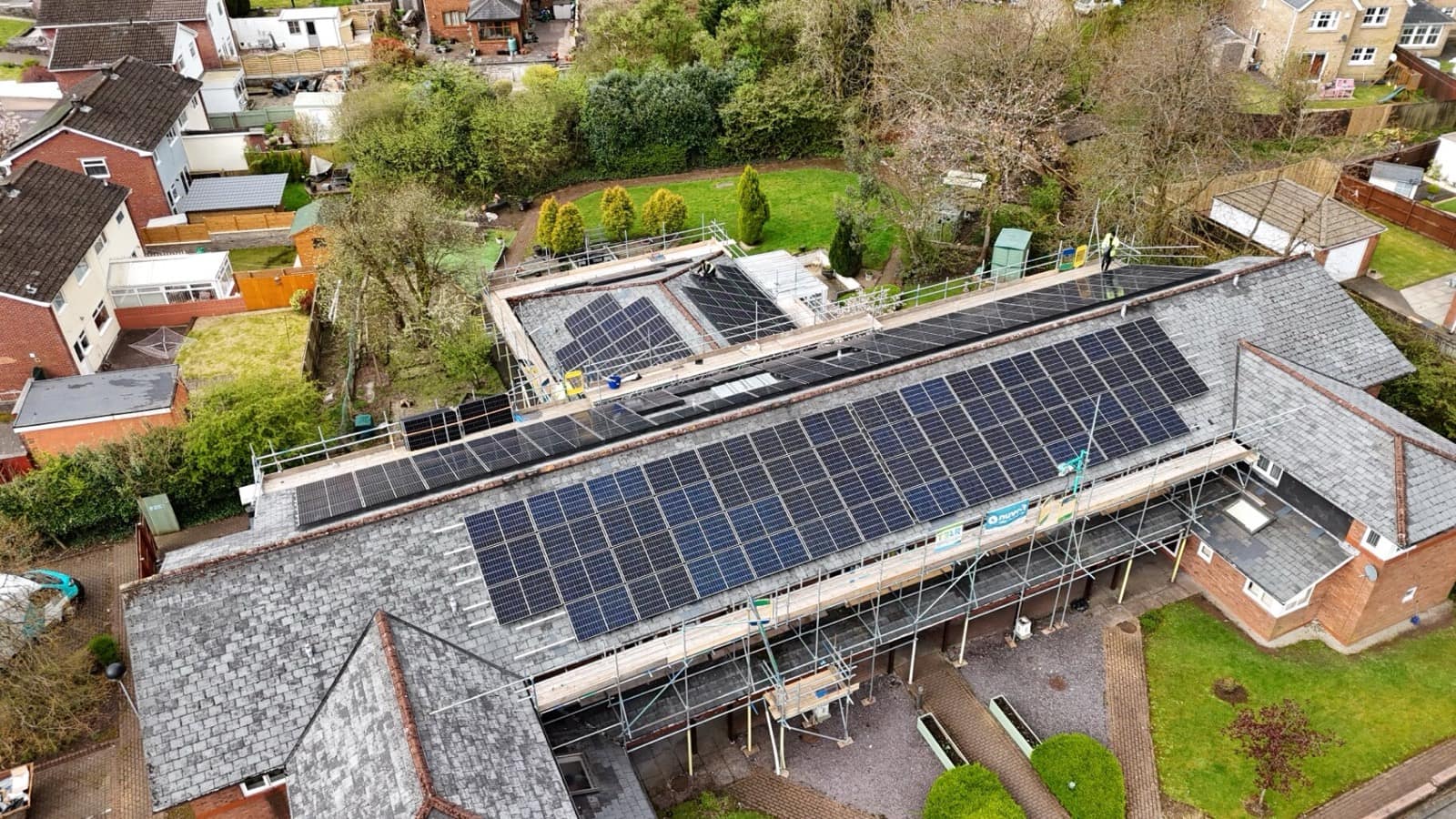
Delivered without disruption. Operating. Measurably saving.
Commercial solar, answered.
Let's have a strategic conversation about your energy position.
An assessment, a benchmark, a roadmap — whichever is most useful. A short conversation with engineers who run commercial energy every day, not a sales call.