How do businesses decarbonise without an unfunded, undeliverable plan?
By converting a public net-zero commitment into a costed, phased delivery roadmap — sequenced by financial return, operational fit and funding structure.
Turn a public commitment into a costed, deliverable plan.
If this is the conversation happening inside your business, you're not alone — and the symptoms below are usually the first sign.
- A net-zero date announced before the plan was written
- ESG reporting outpacing actual reduction
- Sustainability targets disconnected from capital planning
- No agreed sequence between sites, scopes or technologies
The cost of leaving this unsolved.
These aren't theoretical risks. They're the compounding business consequences we see when this challenge is left to sit.
Public commitments create real exposure
A net-zero date in an annual report is a contract with investors, customers and regulators. Missing it is reputational risk, not a soft target.
Capital gets spent without compounding
Disconnected projects deliver headline wins but don't add up to the trajectory the commitment requires.
ESG reporting outruns delivery
When measured reduction lags reported intent, audit, lender and customer scrutiny intensify.
Finance and sustainability stop trusting each other
Without a shared plan, every funding request becomes a negotiation rather than the next step in an agreed programme.
Decarbonisation is a sustainability problem.
Net zero is a capital allocation problem dressed as a sustainability one.
The technologies are well understood. What decides whether the target is hit is the order projects are delivered in, and how they are funded — both of which are finance decisions, not ESG ones. Headline targets get announced for the right reasons, but rarely with a costed pathway. Internal teams then inherit a goal without an operating plan, which is how decarbonisation becomes a series of disconnected projects.
Set the target, then build the plan
Sequence the plan, then defend the target
Run projects as ESG initiatives
Run projects as capital allocation
Report intent
Report metered reduction
Optimise each project in isolation
Compound reduction across a programme
Sequence projects by funded ROI, not by site enthusiasm.
The fastest credible route to the target almost never matches the order suppliers would propose. Building the sequence around funding fit, capacity availability and verified reduction is what turns a public commitment into a deliverable programme.
A clear path from problem to outcome.
Three deliberate steps, framed around the outcome each one delivers — not the engineering it takes.
- 01
Understand
Baseline real emissions from half-hourly data, site by site.
- 02
Design
Sequence projects by ROI, capacity and funding fit into a phased roadmap.
- 03
Deliver & optimise
Build, fund and operate each phase so reduction compounds year on year.
What success actually looks like.
Technology benefits are easy to list. Business outcomes are what the board signs off against.
A net-zero date exists. The plan to hit it doesn't — at least not in a form the board can defend.
There is a costed, sequenced, funded roadmap with verifiable year-on-year reduction. The commitment is now a programme the business can run, not a promise it has to manage.
We've done this before.
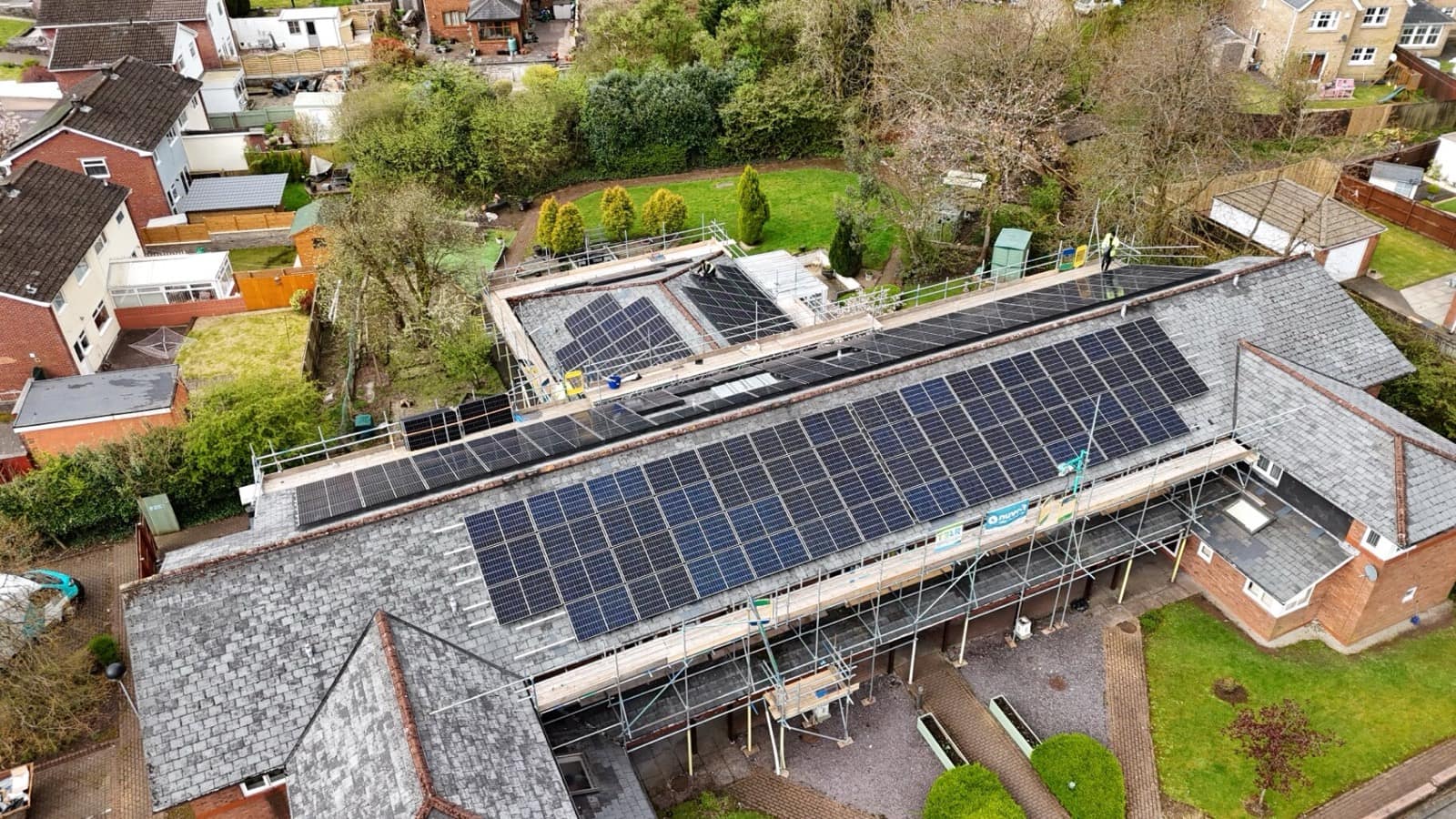
Shaw Healthcare
Turn a public commitment into a costed, deliverable plan.
Bespoke solar + battery storage retrofitted across two 24/7 care facilities without disrupting residents.
76.54 kW solar pv · 2.4 years payback
"From the initial planning stage to the final installation, Nuvolt has demonstrated expertise in the solar and battery storage solution they've implemented. Our relationship with Nuvolt has been instrumental in achieving …"Read the case study
A short way to check whether this is your conversation.
If three or more of the below apply, a strategy conversation is almost always worth the time.
Let's have a strategic conversation about your energy position.
An assessment, a benchmark, a roadmap — whichever is most useful. A short conversation with engineers who run commercial energy every day, not a sales call.