How can businesses make commercial energy costs predictable?
By replacing a single tariff bet with an engineered mix of on-site generation, storage and structured procurement — sized from your half-hourly data and reported as a forecastable P&L line.
Convert a volatile cost into a forecastable P&L line.
If this is the conversation happening inside your business, you're not alone — and the symptoms below are usually the first sign.
- Budget variance from energy is now a board-level conversation
- Renewal cycles dominate the finance team's calendar
- Forecasts move every quarter because the unit rate moves
- Hedging conversations happen without an asset-side strategy
The cost of leaving this unsolved.
These aren't theoretical risks. They're the compounding business consequences we see when this challenge is left to sit.
Margins move with the market
When the unit rate changes every quarter, so does operating profit — and the business is no longer in control of either.
Forecasting confidence erodes
Finance teams stop trusting their own numbers. Capital decisions slow. Pricing decisions slip.
Energy becomes a recurring distraction
Leadership time that should be spent on growth is spent re-running budgets every renewal cycle.
Future investment becomes harder to justify
Electrification, expansion and ESG commitments all assume an energy cost the business can defend. Volatility makes that defence impossible.
The cheapest energy contract wins.
The cheapest contract is often the most expensive long-term strategy.
A contract is a 12–36 month bet. An engineered mix of on-site generation, storage and procurement is a 15–25 year hedge. Optimising the bet ignores the bigger lever. Every kWh is exposed to wholesale markets and peak-window pricing. Without an asset-side strategy, there is nothing structural to absorb a shock — only a new contract to negotiate after one has already landed.
Buy energy as a contract
Own energy as an asset
Optimise the unit rate
Reduce the volume exposed to it
Plan to the next renewal
Plan to a 15–25 year horizon
Procurement decides the strategy
Finance and engineering decide it together
Start with your half-hourly data, not your next renewal date.
The diagnostic that actually matters is the shape of your load — when you use energy, where peaks land, and what's exposed to wholesale movement. Run that first and the right mix of generation, storage and procurement designs itself.
A clear path from problem to outcome.
Three deliberate steps, framed around the outcome each one delivers — not the engineering it takes.
- 01
Understand
Diagnose real exposure from your half-hourly data — not the annual bill.
- 02
Design
Engineer the right mix of generation, storage and procurement around your operation.
- 03
Deliver & optimise
Build, fund and operate the asset so the predictability holds for the life of it.
What success actually looks like.
Technology benefits are easy to list. Business outcomes are what the board signs off against.
Energy is a quarterly surprise. Every forecast carries a caveat. Renewal cycles eat finance-team time.
Energy is a forecastable P&L line. Cost is structurally lower. Renewal is no longer the most important commercial decision the business makes each year.
We've done this before.
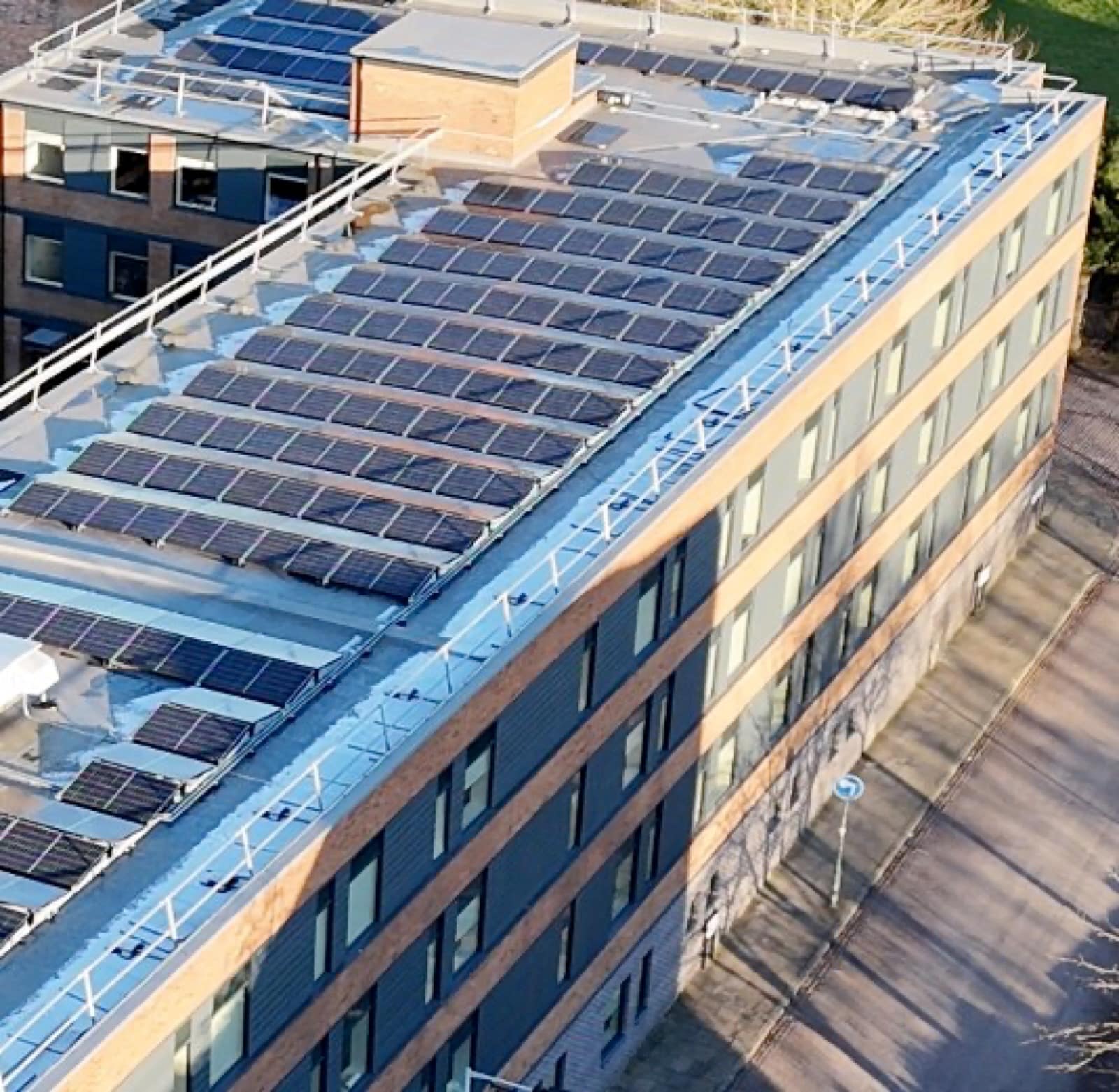
Marston's PLC
Convert a volatile cost into a forecastable P&L line.
Sustainability initiative — headquarters and Phase 1 solar installation across Marston's hospitality estate, delivered with HT Power PPA support.
114.38 kWp system size · 17.44 T co₂ saved
"With the support of Nuvolt's expert team, we are moving forward with solar installations increasing the amount of on-site renewable energy generation. This partnership is a testament to the synergy between our two organi…"Read the case study
A short way to check whether this is your conversation.
If three or more of the below apply, a strategy conversation is almost always worth the time.
Let's have a strategic conversation about your energy position.
An assessment, a benchmark, a roadmap — whichever is most useful. A short conversation with engineers who run commercial energy every day, not a sales call.