Every pound saved on energy goes back to your mission.
Some small charities now spend up to 50% of their budget on utilities, while UK donor numbers sit at their lowest since 2016 — every pound saved on energy is a pound that goes back to the people you exist to serve.
Solar, battery and heat pump infrastructure engineered to reduce long-term energy costs without requiring capital you don't have — built for the trustees, finance managers and service-delivery leads running charities and community organisations.








What the numbers say about charity & community right now.
Small youth charities (under £50k spend) put an average of 13% of outgoings toward utilities — in some cases up to 50%.
The number of people donating to UK charities hit its lowest since CAF's records began in 2016 — even as £15.4bn was donated in 2024.
Source: CAF UK Giving Report 2025
Community buildings need £429m of investment to meet the minimum energy-efficiency standards due in 2030 (7,375 buildings below EPC C; SIB names solar PV among the three key technologies).
Figures are third-party sourced and current at time of publication. Each links to its original source above.
In this sector's language.
The pressures a charity & community team actually voices — not the ones a brochure assumes.
"Rising energy costs are eating into the budget for our actual services"
Every pound spent on a volatile energy bill is a pound not spent on the people the organisation exists to help.
"We don't have capital to invest upfront"
Unlike a commercial business, many organisations have limited unrestricted reserves or borrowing capacity to draw on.
"We need to prove impact to funders and trustees, not just install equipment"
A funding decision has to be justified against the organisation's core mission.
"We can't disrupt the people who rely on our services"
Many community buildings are in continuous use by vulnerable service users.
Where does your site actually sit?
Five quick questions. No form, no number to chase — a directional read on your real constraint, and the fastest route in.
Which of these sounds most like you?
No capital, and every spend judged against the mission.
Charities and community organisations carry a funding constraint most commercial energy providers aren't built to solve — genuinely little or no capital to invest, alongside a duty to justify every spending decision against frontline service delivery.
No capital to invest
Many charities rely heavily on grants, donations and restricted funds, which often rules out a standard CapEx conversation from the start.
Impact reporting to funders and trustees
The investment case has to be framed in terms trustees and funders will actually approve.
Continuous use by service users
Many community buildings can't close, and service users are often vulnerable, raising the bar on disruption-free delivery.
Combined technology needs
Heat pumps alongside solar and storage are increasingly part of the picture, not solar in isolation.
The methodology — not just the claim.
- 01
Building-use and funding-constraint audit
Mapping half-hourly demand against continuous, often vulnerable-service-user occupancy, and against genuinely available capital.
- 02
Zero-capital route assessment
Starting from what can be delivered with no upfront cost, rather than a generic system-size assumption.
- 03
Impact-reporting framework
Structuring the investment case around savings redirected to frontline services, in terms trustees and funders will actually approve.
- 04
Integrated design and delivery
Solar, storage and heat pumps designed as one system where relevant, delivered around continuous building use.
Problem, solution, outcome.
- 1 · Problem
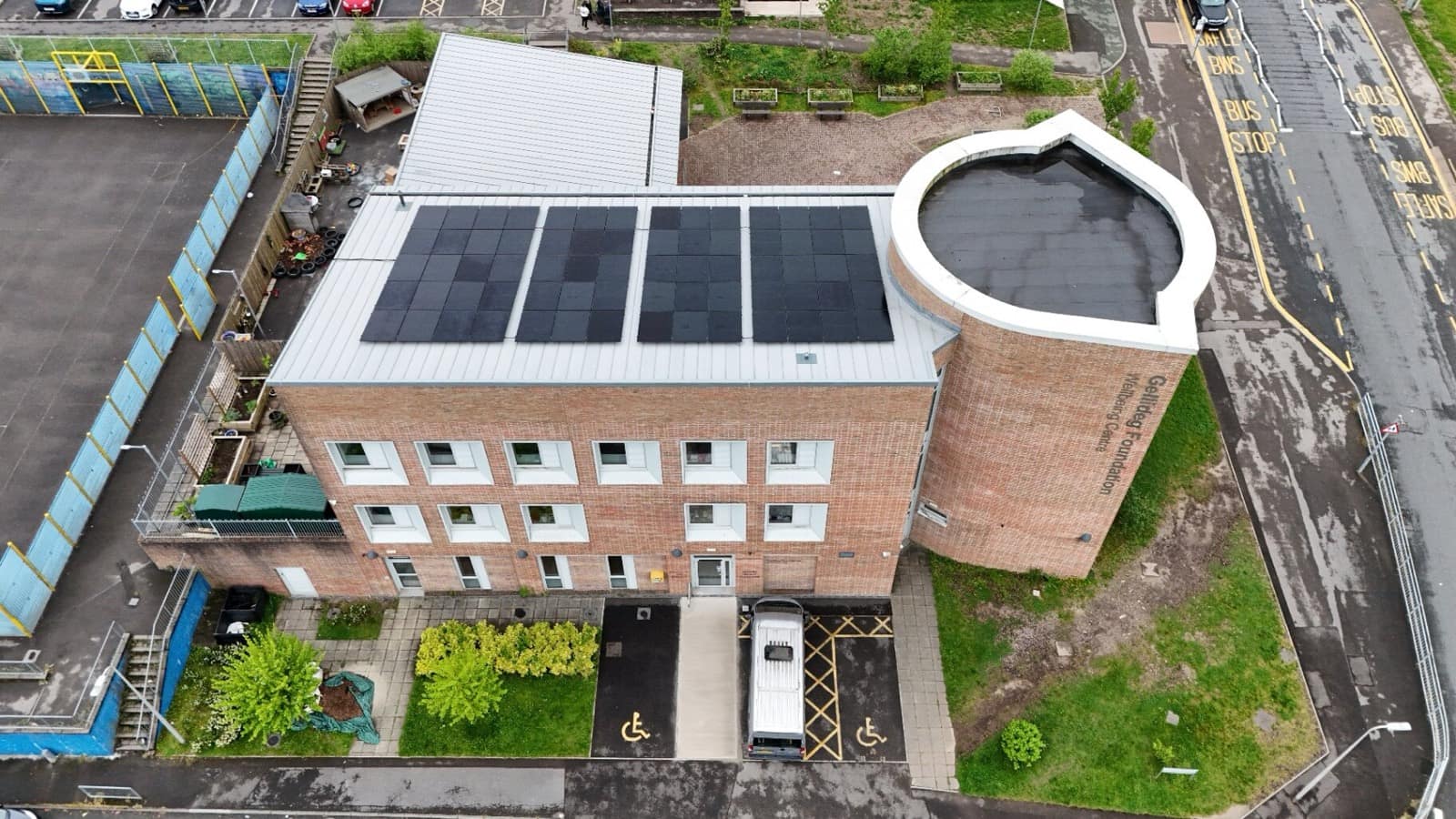
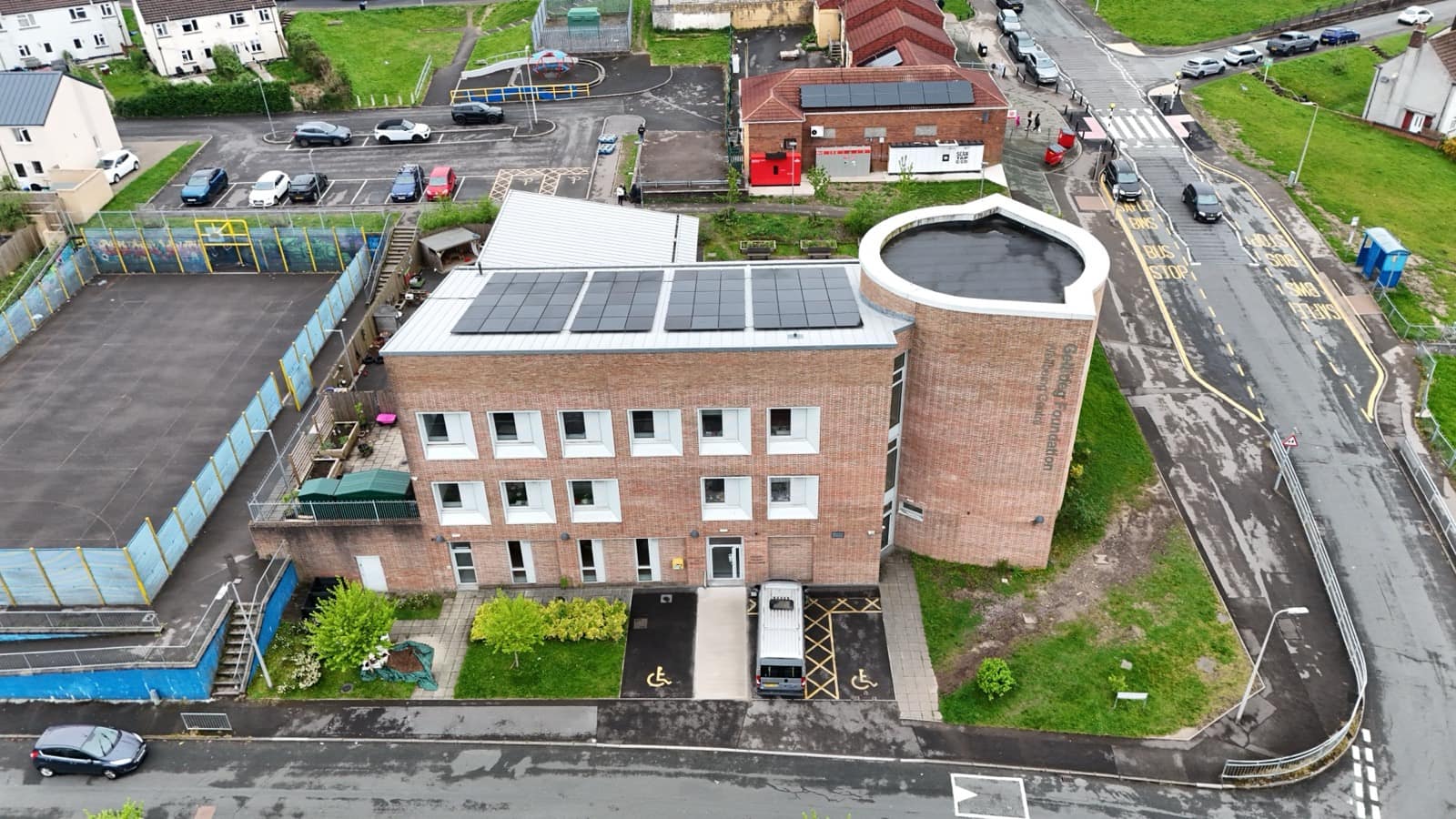
The Gellideg Foundation Group's Wellbeing Centre supports more than 600 people every week through a wide range of community services. As a self-funded charity, increasing energy costs were placing growing pressure on operational budgets, diverting resources away from services and support programmes.
- 2 · Solution
Nuvolt delivered 32.2 kWp of solar PV, 37.3 kWh of battery storage and two 30kW air-source heat pumps — a combined system engineered to reduce long-term energy expenditure and improve the building's overall energy performance.
- 3 · Outcome
£18,000 in annual savings, redirecting resources back toward the services and support programmes more than 600 people rely on every week, rather than an increasingly volatile energy bill.
We've done this before.
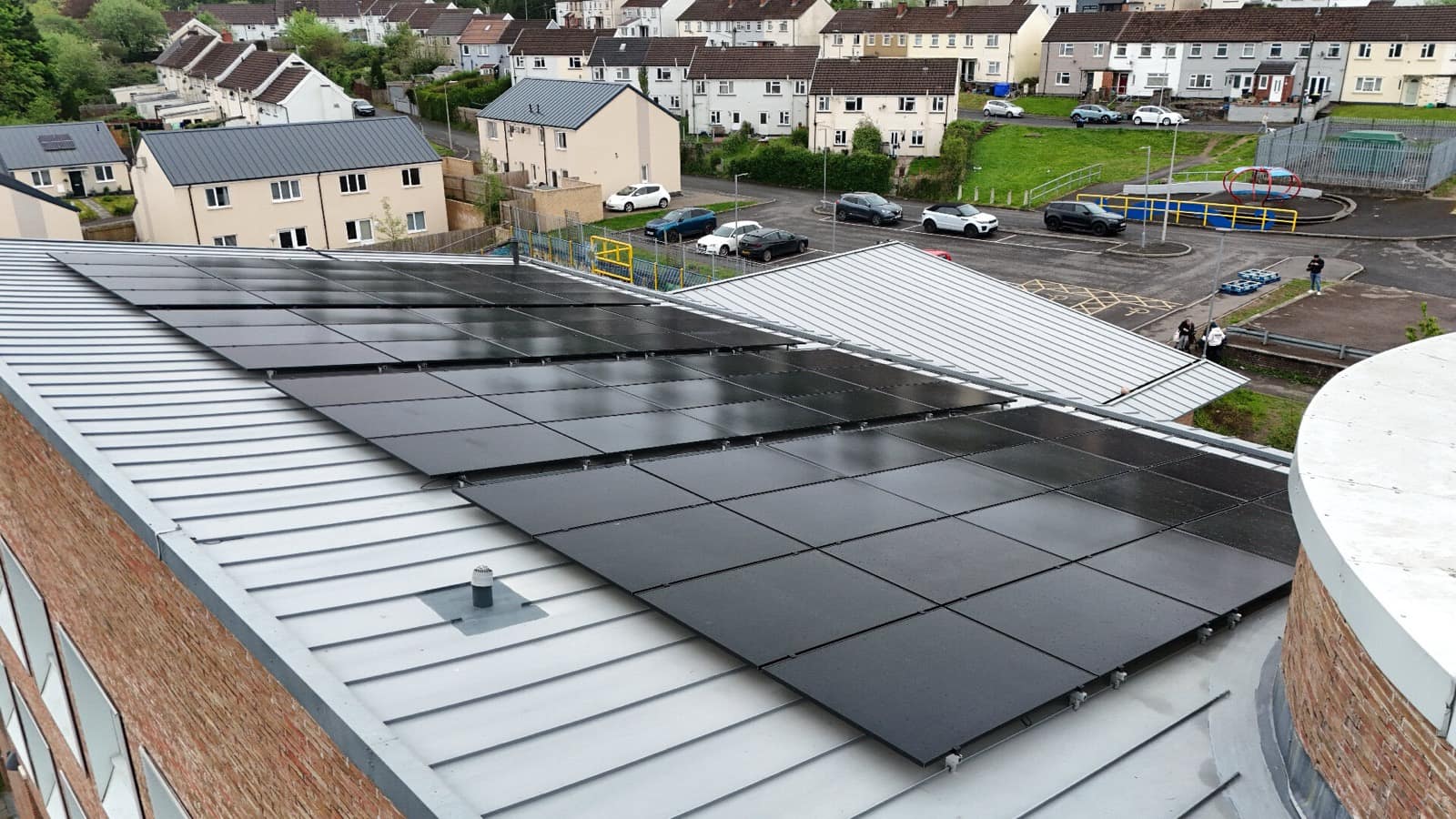
A combined solar, battery and heat pump system engineered around a self-funded charity supporting more than 600 people every week.
The commercial upside, in plain terms.
Savings redirected to frontline services
At Gellideg, roughly £18k a year in energy savings redirected toward the services the building exists to deliver.
Zero-CapEx route for capital-constrained orgs
A funding structure that doesn't assume unrestricted reserves or borrowing capacity you may not have, so the investment becomes possible without upfront capital.
An impact story funders and trustees can report
Pounds saved and redirected to services — an investment case a board can actually approve and account for.
Solar, battery and heat pump as one system
Generation, storage and heat designed together where it fits the building, not solar bolted on in isolation.
Delivered around continuous, vulnerable-user access
Installation and operation planned around a building that can't close and users who can't be disrupted.
One accountable partner, whole-life
Strategy, engineering, funding and operation under one contract — no unaccountable subcontractor the organisation can't afford.
Benefit statements are illustrative of Nuvolt's engineering approach. Project-specific figures are modelled against your own site data; sector statistics are drawn from the third-party sources cited on this page.
How we deliver it, end to end.
One accountable partner across the whole engagement — from the first load audit to lifetime operation.
A line for every role that has to sign this off.
Finance Director / CFO
A funding structure that doesn't assume capital the organisation doesn't have, with the investment case framed around annual savings redirected to frontline services.
Operations Director
Installation and ongoing operation designed around a building in continuous, vulnerable-service-user use — not a standard commercial delivery schedule.
Sustainability Lead
An impact story trustees and funders can actually report — pounds saved and redirected to services, not a generic carbon figure.
Managing Director
Confidence that a genuinely capital-constrained organisation can still make this investment, without exposing it to funding risk it can't carry.
Suited to this sector.
Funding gets equal weight to engineering. The right structure follows the business, not the other way round.
Energy-as-a-Service is the clearest route for most charities and community organisations — zero CapEx, a fixed unit rate below the current tariff — turning an investment decision the organisation genuinely couldn't otherwise make into one it can.
The objections we hear most.
The questions every charity & community team puts to us before a first conversation — answered straight.
Still have a question? Talk to us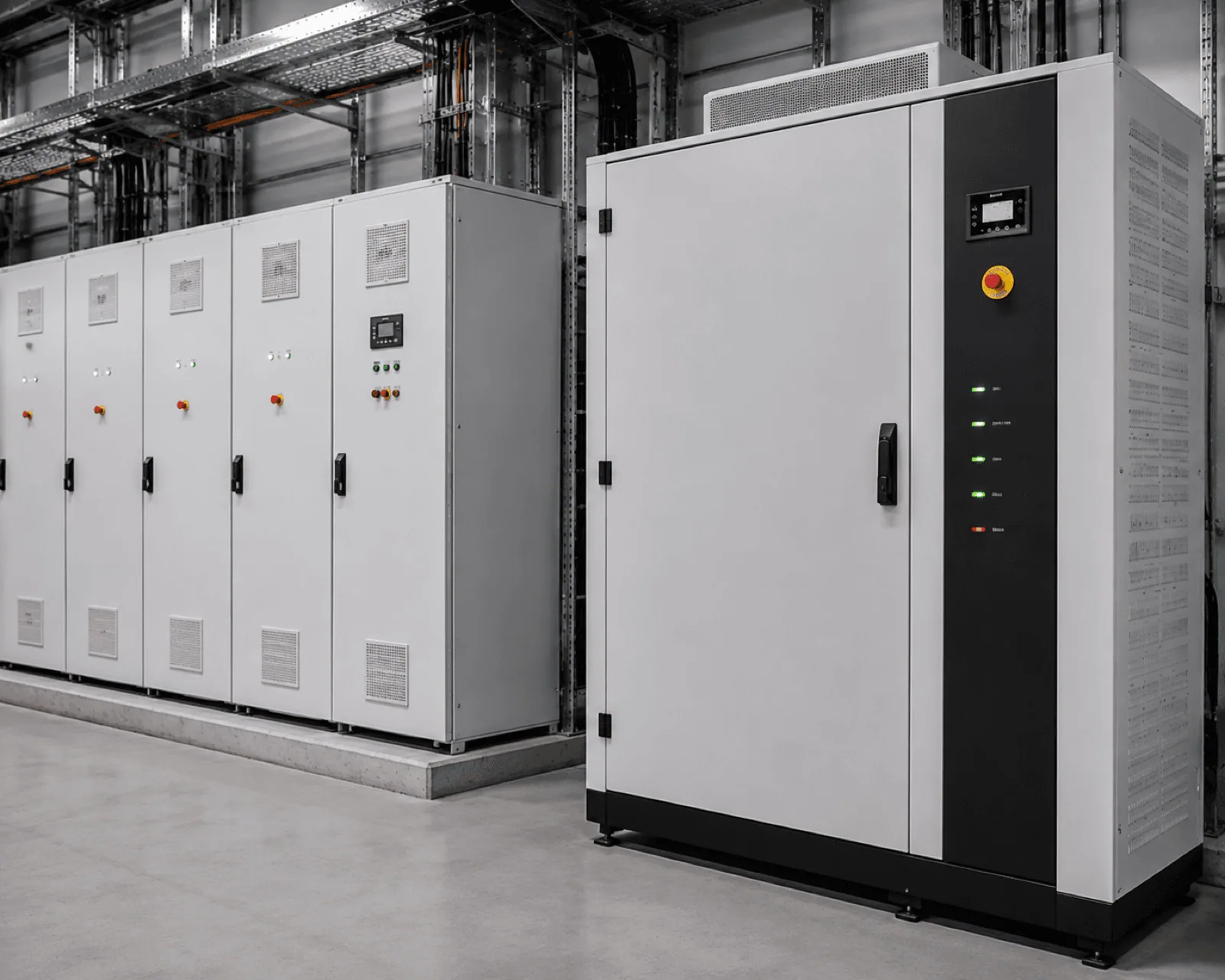
System sizing for a charity or community building is driven by the funding constraint as much as the demand profile.
Ranges are illustrative of Nuvolt's engineering approach and must not be read as a quote, estimate or guarantee. Every site is sized against its own data.
- 1Combined solar, storage and heat pump systems (as at Gellideg) are increasingly the standard pattern in this sector, rather than solar alone.
- 2Funding structure is usually the first design decision in this sector — projects often start from "what can be delivered with little or no upfront capital" rather than a generic system size.
- 3Installation is scheduled around continuous building use by service users, often requiring closer coordination than a standard commercial site.
A short conversation. No quote, no pitch — a genuine read on what's achievable at your site without upfront capital, and how the savings would go back to your mission.
Request a no-capital feasibility review. We'll assess what's genuinely achievable at your site without upfront investment, and how the savings case would be framed for your trustees or funders.
- 1Share your building's energy bills and how the organisation is funded — we'll help you request half-hourly data if you don't have it.
- 2We assess what's genuinely achievable at your site with no upfront capital, solar, storage and heat pump together where it fits.
- 3You get a feasibility read and a savings case framed for your trustees or funders — before any commitment.
Let's have a strategic conversation about your energy position.
An assessment, a benchmark, a roadmap — whichever is most useful. A short conversation with engineers who run commercial energy every day, not a sales call.