
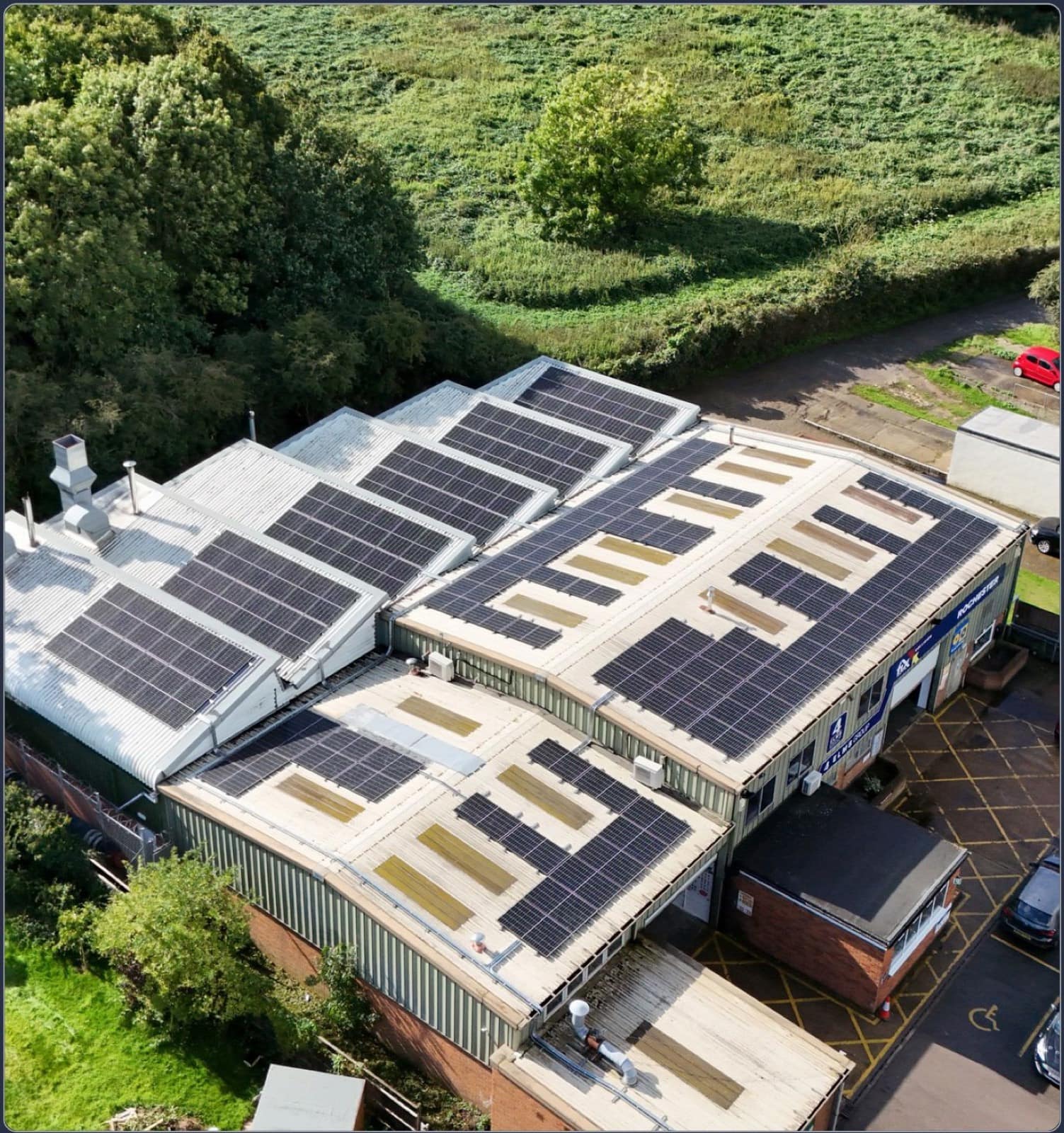
Asset Finance
Acquire and own the asset over time — spreading the cost into fixed monthly payments while keeping the savings on day one.
Asset Finance funds the upfront cost through a regulated lender, typically over a 5–10 year term. Your business takes ownership of the system (immediately or at the end of the term, depending on structure), pays a fixed monthly amount, and starts benefiting from energy savings from commissioning — usually with the savings offsetting most of the finance payment.
- Businesses with a strong project case but limited deployable cash
- CFOs who prefer predictable monthly outgoings over a single capital event
- Operators wanting to preserve capital for core revenue-generating investment
The asset finance model, step by step.
- Step 1
Project priced
We engineer the system and price it as a fixed turnkey scope — the basis for the finance facility.
- Step 2
Finance arranged
A regulated lender provides the facility over 5–10 years at a fixed rate, secured against the asset itself.
- Step 3
Pay monthly, save monthly
Commissioning starts savings immediately; the monthly finance payment is usually well below those savings.
- Step 4
Take title
At the end of the term the asset transfers fully to your balance sheet — owned outright with no residual.
Typical scenarios where Asset Finance fits.
- Capital is scarce or earmarked for core trading investment
- The project NPV is strong but the upfront cost exceeds the comfortable spend window
- Multi-site rollout where each site can be financed separately
- Finance team prefers a known fixed cost to a variable energy bill
- On balance sheet under IFRS 16 — affects gearing and covenants
- Total cost is higher than CAPEX once interest is included
- Lender will run credit checks and may require parent-company guarantees
- Early settlement is possible but often carries a fee — model the exit before signing
A balanced view — what to weigh before you choose.
No commercial model is universally right. Below is an honest read of the trade-offs we walk clients through before structuring a deal.
- Zero or minimal CapEx outlay to deploy infrastructure
- Day-one savings typically exceed the monthly finance payment
- Full ownership of the asset at the end of the term
- Fixed-rate payments insulate the project from interest-rate movement
- Capital preserved for higher-return core-business investment
- Sits on balance sheet — review with finance for covenant implications
- Total project cost is higher than CAPEX once interest is factored in
- Credit underwriting can extend timelines — start the conversation early
- Asset, O&M and warranty risk still sit with the business as eventual owner
- Lease tenure should comfortably exceed the finance term
How Asset Finance applies to each technology.
Solar PV
Excellent fit. Solar's predictable cash flow makes lender underwriting straightforward and the structure self-funding.
Battery Storage
Workable, but lenders look closely at revenue-stack assumptions where the asset relies on grid services.
EV Charging
Common where utilisation is contracted or where charging supports a clear operational saving.
Energy Management
Usually bundled with the financed solar or storage scope rather than financed standalone.
Let's have a strategic conversation about your energy position.
An assessment, a benchmark, a roadmap — whichever is most useful. A short conversation with engineers who run commercial energy every day, not a sales call.