
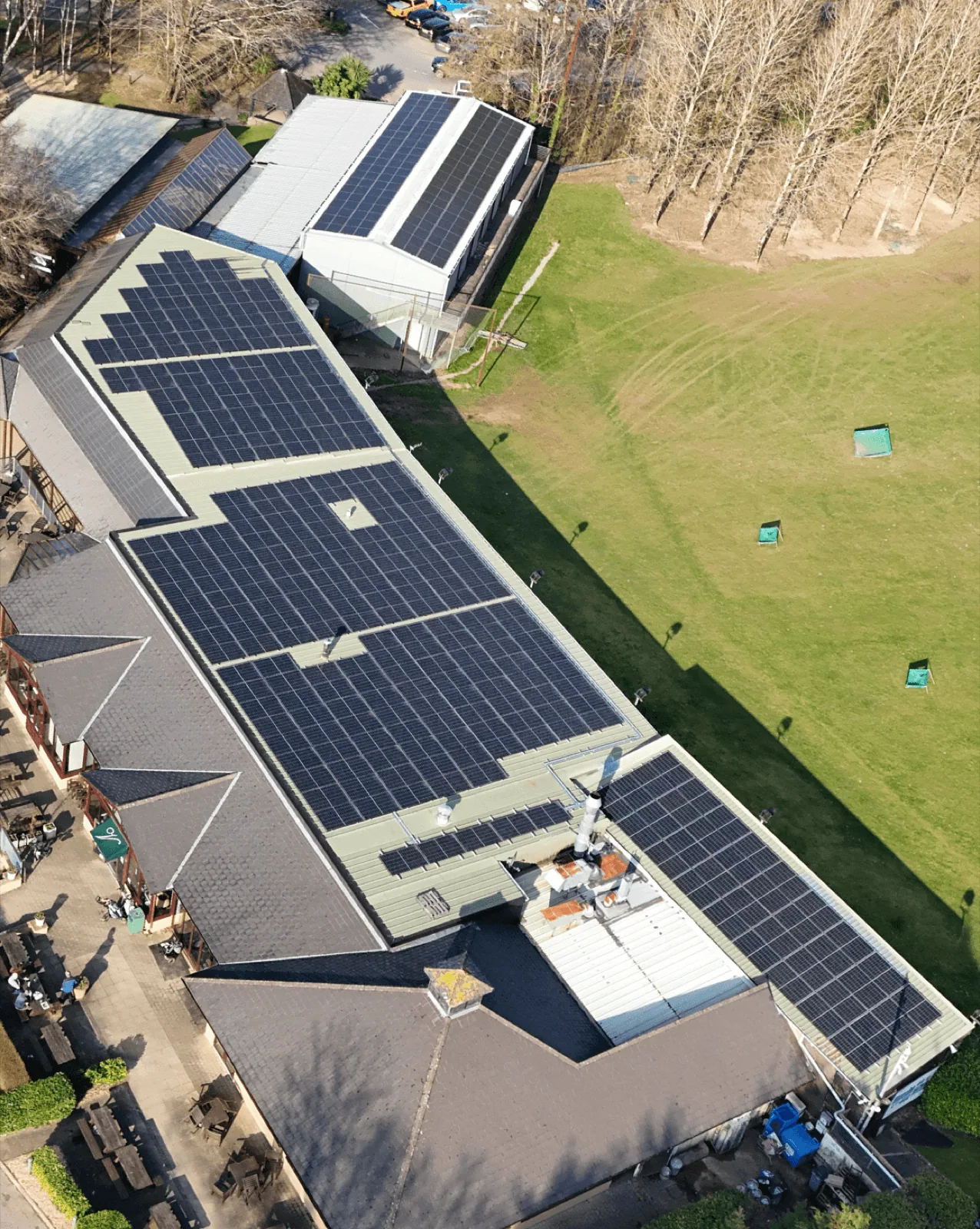
New revenue, not just lower costs.
60 golf clubs in England and Wales have closed since 2020, and clubs face wage, maintenance and energy-cost pressure on already-tight margins — cutting costs now matters as much as raising revenue.
Solar and EV charging infrastructure engineered around a live events calendar and limited site space — with EV charging as a potential new revenue stream, not just a cost reduction. Built for club managers, committees and Finance Directors at golf clubs and leisure venues.









What the numbers say about golf, leisure & hospitality venues right now.
60 golf clubs in England and Wales closed between March 2020 and March 2025 (1,870→1,810 venues), many sold to housing developers.
Source: The Golf Business, citing Valuation Office Agency data
Clubhouse staff wages rose almost 60% (£237k→£378k), course maintenance +26%, and clubs anticipated a further 7% rise in energy costs.
A ukactive survey (143 council areas, 579 private sites) found some leisure facilities saw energy bills rise more than 200% vs pre-crisis, with 75% of private operators already raising prices.
Source: ukactive (May 2024)
77 local authority-managed leisure centres closed across the UK between 2021 and 2024, with rising utility costs cited as a factor.
Figures are third-party sourced and current at time of publication. Each links to its original source above.
In this sector's language.
The pressures a golf, leisure & hospitality venues team actually voices — not the ones a brochure assumes.
"Our margins are seasonal and tight"
A busy events calendar generates most of the year's revenue in a compressed window, leaving little room for disruption.
"We don't have space to spare"
Course design, parking and member facilities already compete for limited land.
"Members expect environmental stewardship, but we can't fund a symbolic gesture"
Sustainability has to make commercial sense.
"We need new revenue, not just lower costs"
A declining or flat membership base makes a new income line as valuable as a cost saving.
Where does your site actually sit?
Five quick questions. No form, no number to chase — a directional read on your real constraint, and the fastest route in.
Which of these sounds most like you?
A generic installer won't design around your calendar.
Golf clubs and leisure venues carry constraints most solar installers don't design around — a live events calendar that can't absorb disruption, genuinely limited spare land, and a commercial case that increasingly needs to include new revenue, not just cost reduction.
Event-calendar sensitivity
Weddings, tournaments and corporate hospitality can't be disrupted by installation work, and neither can member access to the course.
Limited site space
Course layout, parking and clubhouse facilities are already competing for land.
Revenue-generating infrastructure
EV charging can be designed as a new income line for members and visitors, not purely a cost-saving measure.
Seasonal demand
Like hospitality more broadly, a club's energy demand curve shifts with the season and the events calendar.
The methodology — not just the claim.
- 01
Site and event-calendar audit
Mapping half-hourly demand against your events calendar, course layout and available land or roof space before any design work starts.
- 02
Demand-curve vs generation-curve gap analysis
Identifying where clubhouse, catering and course-maintenance loads can be offset, and where a new EV charging revenue stream fits.
- 03
Constraint and disruption assessment
Planning installation entirely around live events, member access and course operations.
- 04
Integrated design and phased delivery
Solar and EV infrastructure designed to fit genuinely limited space, with delivery planned around your events calendar to minimise disruption.
Problem, solution, outcome.
- 1 · Problem
Morlais Castle Golf Club wanted to reduce operational energy costs, lower carbon emissions and support its wider sustainability objectives. Limited installation space and a busy calendar of weddings, hospitality events and corporate functions created significant challenges for project delivery.
- 2 · Solution
Nuvolt engineered a solution around the club's physical and operational constraints, delivering EV chargers as a new revenue stream alongside carbon reduction — with delivery planned around the events calendar to minimise disruption.
- 3 · Outcome
4 tonnes of CO₂ saved annually, with EV chargers now generating a new revenue stream for the club, delivered with the work planned around the club's weddings, tournaments and corporate functions to minimise disruption.
We've done this before.
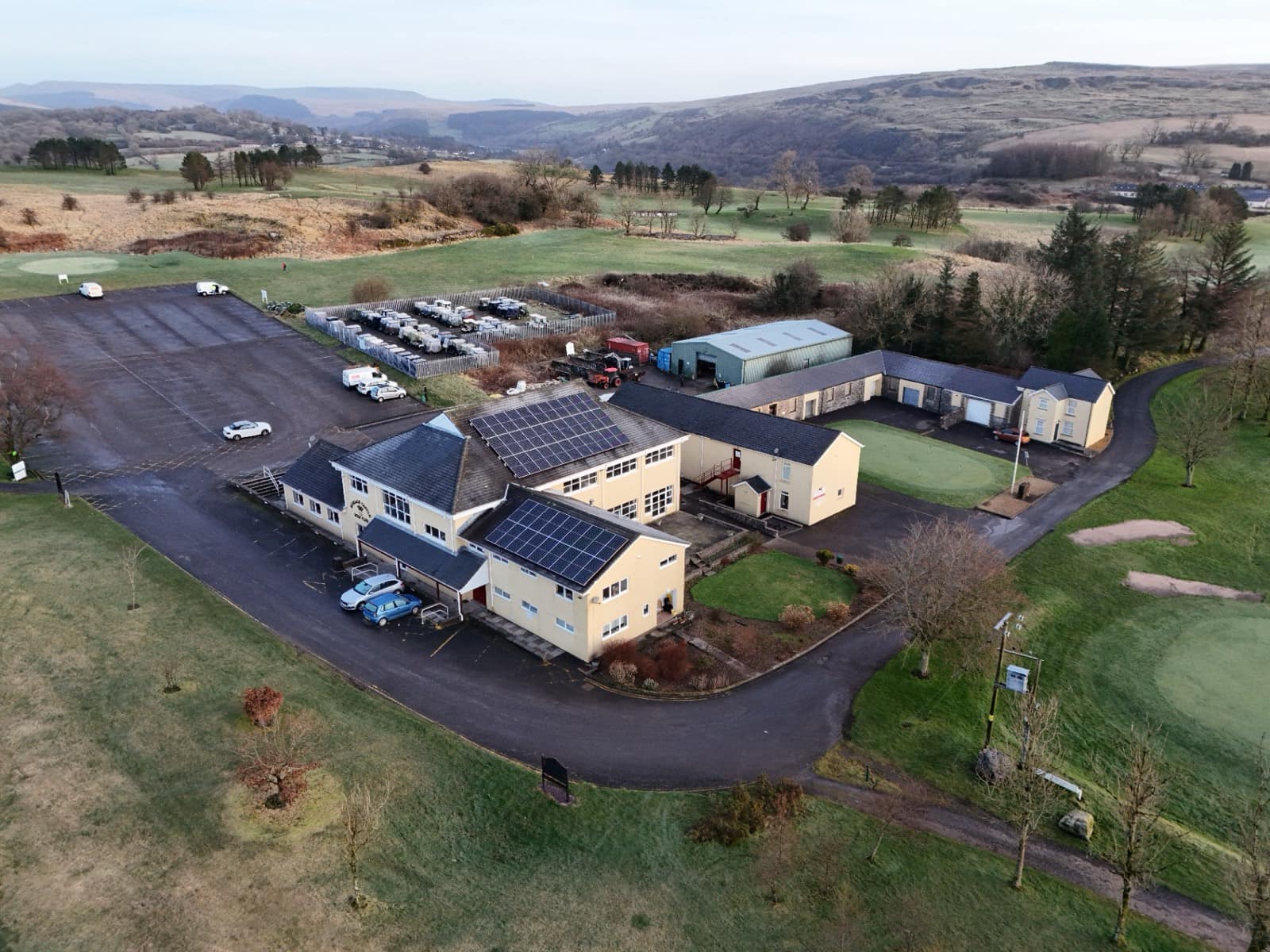
Solar and EV charging delivered around a busy calendar of weddings, tournaments and corporate functions — with the chargers as a new revenue stream.
The commercial upside, in plain terms.
Deliver around a live events calendar
Installation phased around weddings, tournaments and corporate hospitality — no disrupted events, no interrupted member access.
Engineer around limited land/roof
Course layout, parking and clubhouse space are worked around, not treated as a reason to decline the project.
EV charging as a new revenue line
Chargers designed as a genuine income stream for members and visitors, not purely a cost-saving measure.
A commercial case, not a symbolic gesture
A sustainability story the committee can defend financially, built on the numbers first.
Seasonal-demand-matched sizing
Generation sized against your real peak-season demand, with the system matched to a demand curve that shifts with the calendar.
One partner for a constrained working venue
A single accountable partner managing a technically and operationally constrained site — not a generic installer unfamiliar with a working venue.
Benefit statements are illustrative of Nuvolt's engineering approach. Project-specific figures are modelled against your own site data; sector statistics are drawn from the third-party sources cited on this page.
How we deliver it, end to end.
One accountable partner across the whole engagement — from the first load audit to lifetime operation.
A line for every role that has to sign this off.
Finance Director / CFO
A commercial case that includes new revenue (EV charging income) as well as cost reduction — relevant where membership income alone doesn't cover the investment case.
Operations Director
Delivery planned entirely around a live events calendar, with zero disruption to weddings, tournaments and member access as a non-negotiable design constraint.
Sustainability Lead
A genuine, cost-justified sustainability story for members and sponsors — not a symbolic gesture the committee can't defend financially.
Managing Director
One accountable partner managing a technically and operationally constrained site, rather than a generic installer unfamiliar with a working golf or leisure venue.
Suited to this sector.
Funding gets equal weight to engineering. The right structure follows the business, not the other way round.
Clubs and venues with constrained capital — member-owned clubs in particular — are well suited to Energy-as-a-Service or asset finance, especially where EV charging revenue can help offset the funding structure over time.
The objections we hear most.
The questions every golf, leisure & hospitality venues team puts to us before a first conversation — answered straight.
Still have a question? Talk to us
System sizing and layout for a golf club or leisure venue depend heavily on available land, course design and the events calendar — more than most sectors in this hub.
Ranges are illustrative of Nuvolt's engineering approach and must not be read as a quote, estimate or guarantee. Every site is sized against its own data.
- 1EV charger placement is planned to avoid disrupting parking, course access and event logistics, and can be designed to generate direct revenue.
- 2Installation phasing works around the events calendar rather than a standard commercial delivery timeline.
- 3Where roof or ground space is limited, smaller, well-matched systems (as at Morlais Castle) can still deliver a strong commercial case.
A short conversation. No quote, no pitch — a commercial view of where your venue's energy position actually sits, and where new revenue could sit alongside it.
Request a site and events-calendar review. We'll map what's achievable within your space and events schedule, including where EV charging could become a new revenue line.
- 1Share your events calendar and consumption data — or we'll help you request the half-hourly data from your supplier.
- 2We map what's achievable within your available land, course layout and events schedule.
- 3You get a commercial read on your energy position — including where EV charging could become a new revenue line.
Let's have a strategic conversation about your energy position.
An assessment, a benchmark, a roadmap — whichever is most useful. A short conversation with engineers who run commercial energy every day, not a sales call.