
A target isn't a delivery plan.
The LGA estimates councils face a £7bn funding black hole within three years — a net zero commitment without a costed delivery plan doesn't survive that budget review.
Solar infrastructure — from single-site rooftop systems to utility-scale solar farms — engineered to a business case that survives finance and audit scrutiny, not just a council motion. Built for finance directors, estates teams and climate leads in local government and public bodies.









What the numbers say about public sector & local government right now.
The 2025 Council Climate Action Scorecards assessed all 391 UK councils; the average action score was 38%, and 300+ councils have declared a climate emergency.
Source: Climate Emergency UK, 2025 Council Climate Action Scorecards
Councils face a £7bn funding black hole within three years — a £2.0bn gap in 2026/27 rising to £7.0bn by 2028/29.
Source: Local Government Association
English councils have identified 32,884 hectares of brownfield land across 30,257 sites — space for almost 1.5 million homes.
Source: CPRE, State of Brownfield 2025
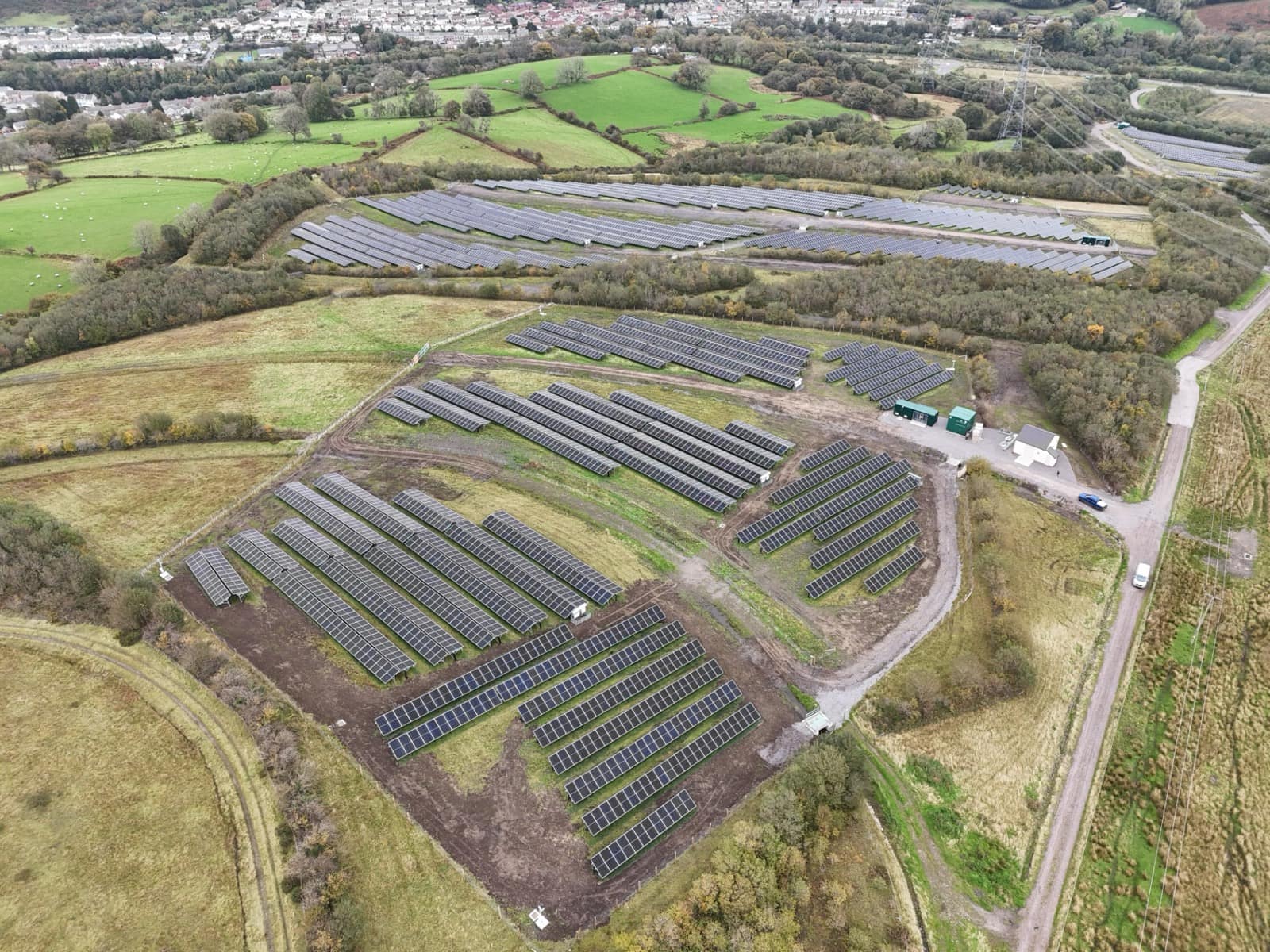
Warrington Borough Council's GRIDSERVE-delivered hybrid solar farms near York and Hull, with battery storage, power the equivalent of 18,000 homes and save ~25,000 tonnes of CO₂ a year.
Figures are third-party sourced and current at time of publication. Each links to its original source above.
In this sector's language.
The pressures a public sector & local government team actually voices — not the ones a brochure assumes.
"We've committed to Net Zero but have no commercial roadmap"
A target without a costed delivery plan doesn't survive the next budget review.
"We have former industrial or underused land with no clear commercial use"
Brownfield and ex-industrial sites are a liability until they're an asset.
"Our procurement has to be transparent and defensible"
Public capital decisions face a different level of scrutiny than a private commercial project.
"We need to show measurable community and environmental benefit, not just a generation figure"
Political and public accountability go beyond the balance sheet.
Where does your site actually sit?
Five quick questions. No form, no number to chase — a directional read on your real constraint, and the fastest route in.
Which of these sounds most like you?
Public projects answer to auditors, not just a P&L.
Public sector energy projects carry constraints most commercial installers aren't built for — multi-year capital planning cycles, procurement transparency requirements, and a duty to demonstrate community and environmental benefit.
Brownfield and ex-industrial site reuse
Turning underused or contaminated land into a productive energy asset requires site-specific engineering.
Multi-year capital planning
Public sector budgeting cycles rarely match a private developer's commercial timeline.
Procurement transparency
Public capital decisions need to be defensible to auditors, councillors and the public.
Community and environmental benefit reporting
Measurable outcomes matter as much to a public body as a straight financial return.
The methodology — not just the claim.
- 01
Site and land assessment
Evaluating brownfield, ex-industrial or underused public land for generation potential, including remediation requirements before design begins.
- 02
Grid connection capacity assessment
Assessing DNO or transmission headroom early, since this is frequently the true limiting factor on public land.
- 03
Procurement and capital-planning alignment
Structuring delivery and funding to fit multi-year public capital planning cycles and procurement transparency requirements.
- 04
Integrated delivery and community/environmental reporting
Engineering, procurement and construction managed as one accountable programme, with measurable outcomes built in for public reporting.
Problem, solution, outcome.
- 1 · Problem
Rhondda Cynon Taf Council required a large-scale renewable energy project capable of supporting its ambition to achieve carbon neutrality by 2030. The challenge was to transform a former industrial site into a productive energy asset.
- 2 · Solution
Nuvolt delivered key electrical infrastructure for Coed-Ely Solar Farm — a 5 MWp utility-scale solar installation with 9,400+ panels on a former industrial site — as part of the council's carbon neutrality strategy (delivery role subject to confirmation against the signed project record).
- 3 · Outcome
9,400+ solar panels generating electricity equivalent to the annual use of approximately 1,800 homes, transforming a former industrial site into a long-term environmental, operational and community asset.
We've done this before.
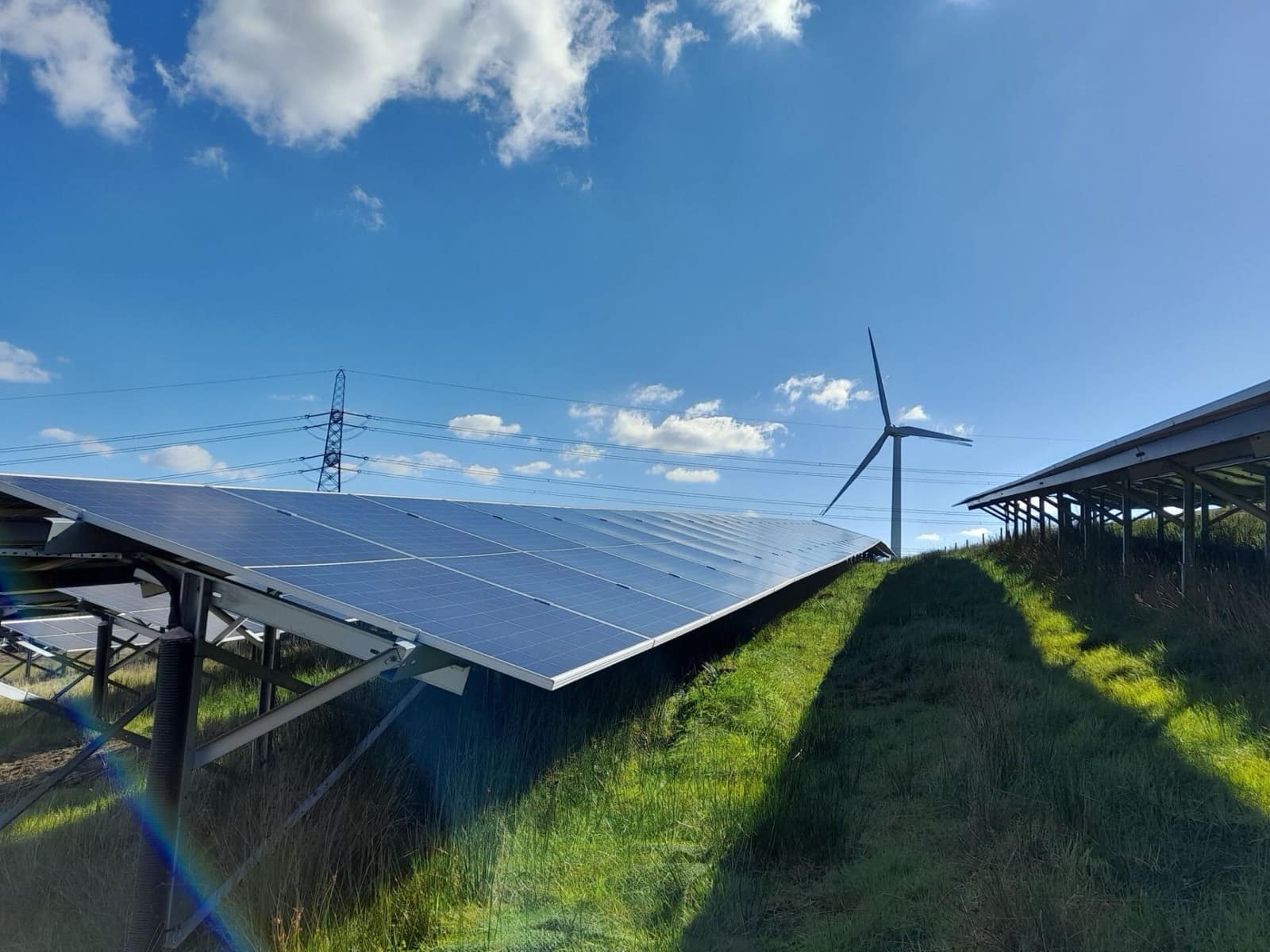
A former industrial site transformed into a 5 MWp utility-scale solar installation with a 1 MW private wire to a local hospital.
The commercial upside, in plain terms.
Turn brownfield liability into a productive asset
Underused or contaminated public land engineered into a generating asset that pays back rather than costs to hold.
A business case that survives audit & public scrutiny
A costed delivery plan built to stand up to auditors, councillors and the public — not just a council motion.
Funding aligned to multi-year capital planning
Delivery and funding structured to fit public sector budgeting cycles rather than a private developer's timeline.
Measurable community & carbon outcomes
Homes-equivalent generation and CO₂ avoided, reported against verifiable data for councillor and public accountability.
Single accountable principal contractor
One partner across engineering, delivery and long-term operation on a technically complex public project.
From single building to utility-scale
The same engineered approach applied to a council depot, a school roof or a 5 MWp solar farm.
Benefit statements are illustrative of Nuvolt's engineering approach. Project-specific figures are modelled against your own site data; sector statistics are drawn from the third-party sources cited on this page.
How we deliver it, end to end.
One accountable partner across the whole engagement — from the first load audit to lifetime operation.
A line for every role that has to sign this off.
Finance Director / CFO
A costed business case built to survive audit and public scrutiny, with a funding structure that fits multi-year public capital planning cycles.
Operations Director
Delivery of a technically complex, large-scale project on a former industrial site, managed by one accountable delivery partner.
Sustainability Lead
Measurable, reportable community and environmental outcomes — homes-equivalent generation, carbon avoided — that stand up to councillor and public scrutiny.
Managing Director
A Net Zero commitment converted into a delivered, operating asset — the difference between a target and a track record.
Suited to this sector.
Funding gets equal weight to engineering. The right structure follows the business, not the other way round.
Utility-scale and public sector projects are typically structured around CapEx or asset finance aligned to multi-year capital planning, though Energy-as-a-Service routes can apply to smaller single-site public buildings.
The objections we hear most.
The questions every public sector & local government team puts to us before a first conversation — answered straight.
Still have a question? Talk to us
System sizing and site selection for public sector and utility-scale projects depend on land use, grid connection capacity and site remediation requirements as much as on demand.
Ranges are illustrative of Nuvolt's engineering approach and must not be read as a quote, estimate or guarantee. Every site is sized against its own data.
- 1Former industrial and brownfield sites often require specific site assessment and remediation planning before design begins.
- 2Utility-scale projects are typically export-led rather than sized purely to a single building's demand.
- 3Grid connection capacity is frequently the limiting factor on public land — assessing DNO headroom early avoids a costly redesign later.
A short conversation. No commitment — a costed view of what's deliverable against your authority's net zero target and budget cycle.
Request a site and capital-planning review. We'll assess land, grid capacity and funding fit against your authority's budget cycle — before any commitment is made.
- 1Share your site, land or estate details — or the net zero commitment you need to deliver against.
- 2We assess land, grid connection capacity and funding fit against your authority's budget cycle.
- 3You get a costed read on what's deliverable — before any commitment is made.
Let's have a strategic conversation about your energy position.
An assessment, a benchmark, a roadmap — whichever is most useful. A short conversation with engineers who run commercial energy every day, not a sales call.