
How can businesses reduce exposure to wholesale energy price volatility?
By building structural protection behind the meter — generation, storage and demand control — so the business isn't fully exposed to wholesale and peak-tariff movements.
Replace a tariff bet with a structural hedge you actually control.
If this is the conversation happening inside your business, you're not alone — and the symptoms below are usually the first sign.
- Energy now a top-three operating cost
- Margin sensitivity to wholesale price movement
- Customer pricing decisions delayed by energy uncertainty
- Hedging cycles measured in months, not years

The cost of leaving this unsolved.
These aren't theoretical risks. They're the compounding business consequences we see when this challenge is left to sit.
Margin moves with the market
In energy-intensive operations, a wholesale price swing translates directly into a margin swing — and the business has no control over either.
Customer pricing decisions get delayed
Commercial teams hesitate to quote long-dated work when the input cost is moving every quarter.
Competitive position erodes
Operators with structural on-site generation absorb shocks the rest of the market passes through.
Strategic decisions sit on hold
Expansion, capital allocation and contract negotiation all get deferred while the business waits for prices to settle.
Volatility is something you hedge.
Volatility is something you engineer out, not something you smooth over.
On-site generation reduces volume exposed to the wholesale market. Storage moves load away from peak windows. Both compound over 15–25 years — a hedge can't. Financial hedges shift when you pay market rates. They don't reduce the underlying volume bought at market rates. The only thing that reduces exposure structurally is owning — or contracting for — energy that isn't priced in the wholesale market.
Hedge to smooth pricing
Engineer volume out of the market
Manage exposure financially
Reduce exposure structurally
Treat on-site generation as ESG
Treat on-site generation as a commercial hedge
Re-open the conversation each renewal
Compound protection over 15–25 years
Treat behind-the-meter generation as a P&L instrument, not an ESG one.
Once the asset is owned and operated against the commercial exposure — sized for volume reduction, dispatched against peaks, reported to finance — it earns its place on the same page as your hedging policy and your renewal strategy.
A clear path from problem to outcome.
Three deliberate steps, framed around the outcome each one delivers — not the engineering it takes.
- 01
Understand
Quantify real exposure to wholesale and peak movement from your data.
- 02
Design
Engineer structural protection behind the meter through generation and storage.
- 03
Deliver & optimise
Operate and report the asset as part of the commercial hedge.
What success actually looks like.
Technology benefits are easy to list. Business outcomes are what the board signs off against.
The business is fully exposed to wholesale and peak-window movement. Every renewal cycle reopens the same conversation.
A structural hedge sits behind the meter. Wholesale movement matters less. The business gets to act on opportunities while competitors wait for prices to settle.
We've done this before.
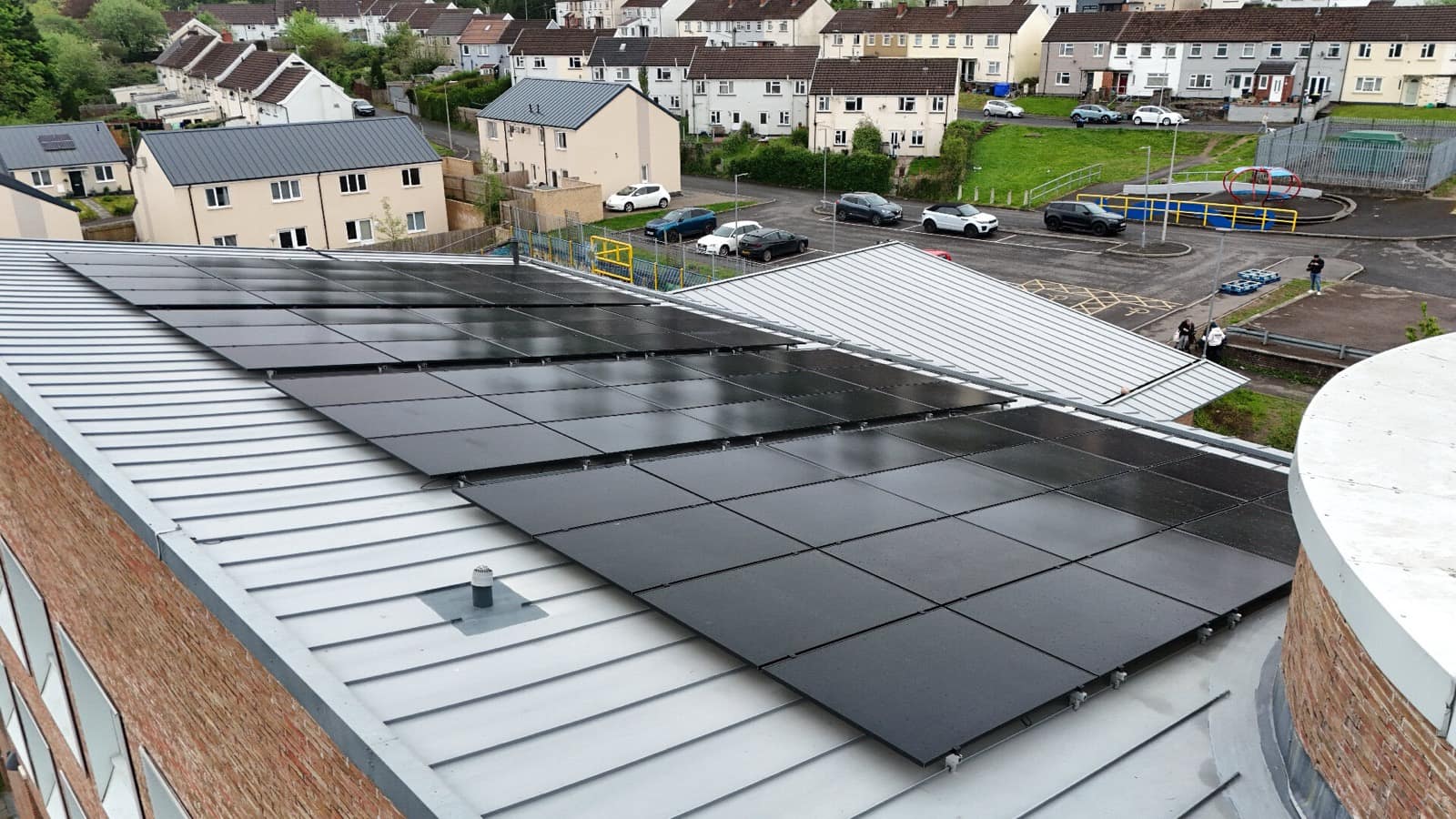
Gellideg Foundation Group
Replace a tariff bet with a structural hedge you actually control.
Integrated solar, battery storage and air source heat pumps for the first community-owned Passivhaus in Wales, funded via Ynni Cymru.
32.2 kWp solar pv · 37.3 kWh battery storage
"This system is not only good for the planet, it's an investment in the future sustainability of our organisation. By reducing our energy costs, we can focus more of our resources on supporting the community."Read the case study
A short way to check whether this is your conversation.
If three or more of the below apply, a strategy conversation is almost always worth the time.
Frequently asked questions
Let's have a strategic conversation about your energy position.
An assessment, a benchmark, a roadmap — whichever is most useful. A short conversation with engineers who run commercial energy every day, not a sales call.