
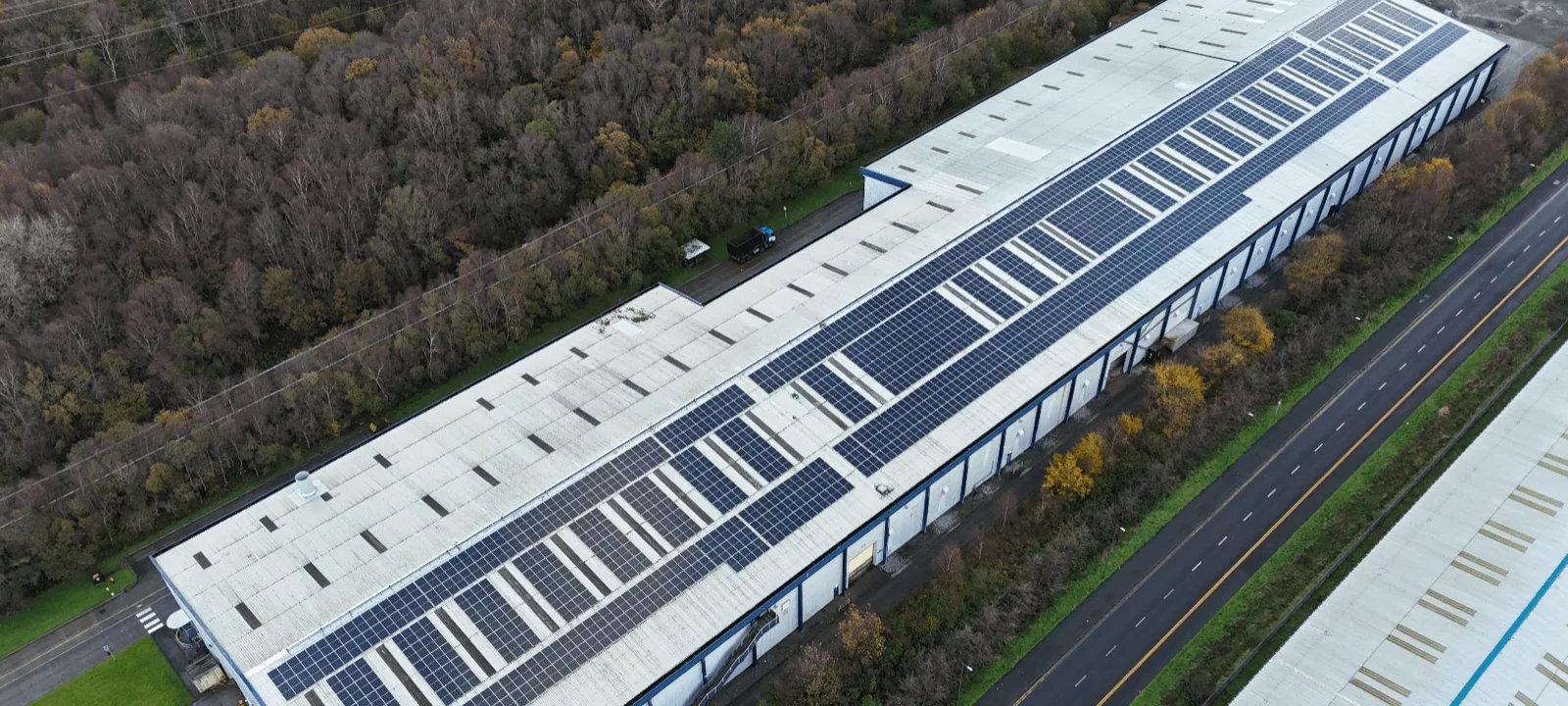
Energy strategy and compliance are now the same conversation.
UK non-domestic electricity prices rose more than 90% between 2021 and 2023 — and recycling and resource recovery sites carry a near-continuous process load that turns every unit-rate rise straight into margin pressure.
Solar infrastructure engineered around continuous process load, heavy vehicle movement and site safety zoning — built for the Operations Directors and Finance Directors running recycling and resource recovery facilities.









What the numbers say about recycling & resource recovery right now.
UK non-domestic electricity prices rose from 14.81p/kWh (Q1 2021) to a peak of 28.39p/kWh (Q4 2023) — over 90% higher.
Source: ONS, The impact of higher energy costs on UK businesses: 2021–2024
Real output of UK energy-intensive industries fell 33.6% between Q1 2021 and Q4 2024.
Source: ONS, The impact of higher energy costs on UK businesses: 2021–2024
In 2024 the EA regulated 14,143 EPR permits in England; the waste sector recorded the highest count of serious pollution incidents of any regulated sector — 146 incidents, 23% of the national total (up 57% on 2023).
Source: Environment Agency, Chief Regulator's Report 2024–25
Veolia's 59 MWp ground-mounted array on the restored Ockendon landfill and SUEZ's rooftop solar at Avonmouth (~17% of site power) are live examples.
Source: Veolia; SUEZ
Figures are third-party sourced and current at time of publication. Each links to its original source above.
In this sector's language.
The pressures a recycling & resource recovery team actually voices — not the ones a brochure assumes.
"Our energy cost is no longer forecastable"
Conveyors, shredders and sorting equipment run continuously, and a volatile unit rate hits margin directly.
"Our site has serious safety and zoning constraints"
Heavy vehicle movement and waste handling create site safety requirements a standard commercial installer isn't used to working within.
"We're mid-modernisation and energy infrastructure has to fit a phased programme"
Capital and construction are often already committed to a wider site upgrade.
"We're under pressure to improve our environmental and carbon performance"
Regulatory scrutiny and reporting expectations go beyond a standard ESG statement.
Where does your site actually sit?
Five quick questions. No form, no number to chase — a directional read on your real constraint, and the fastest route in.
Which of these sounds most like you?
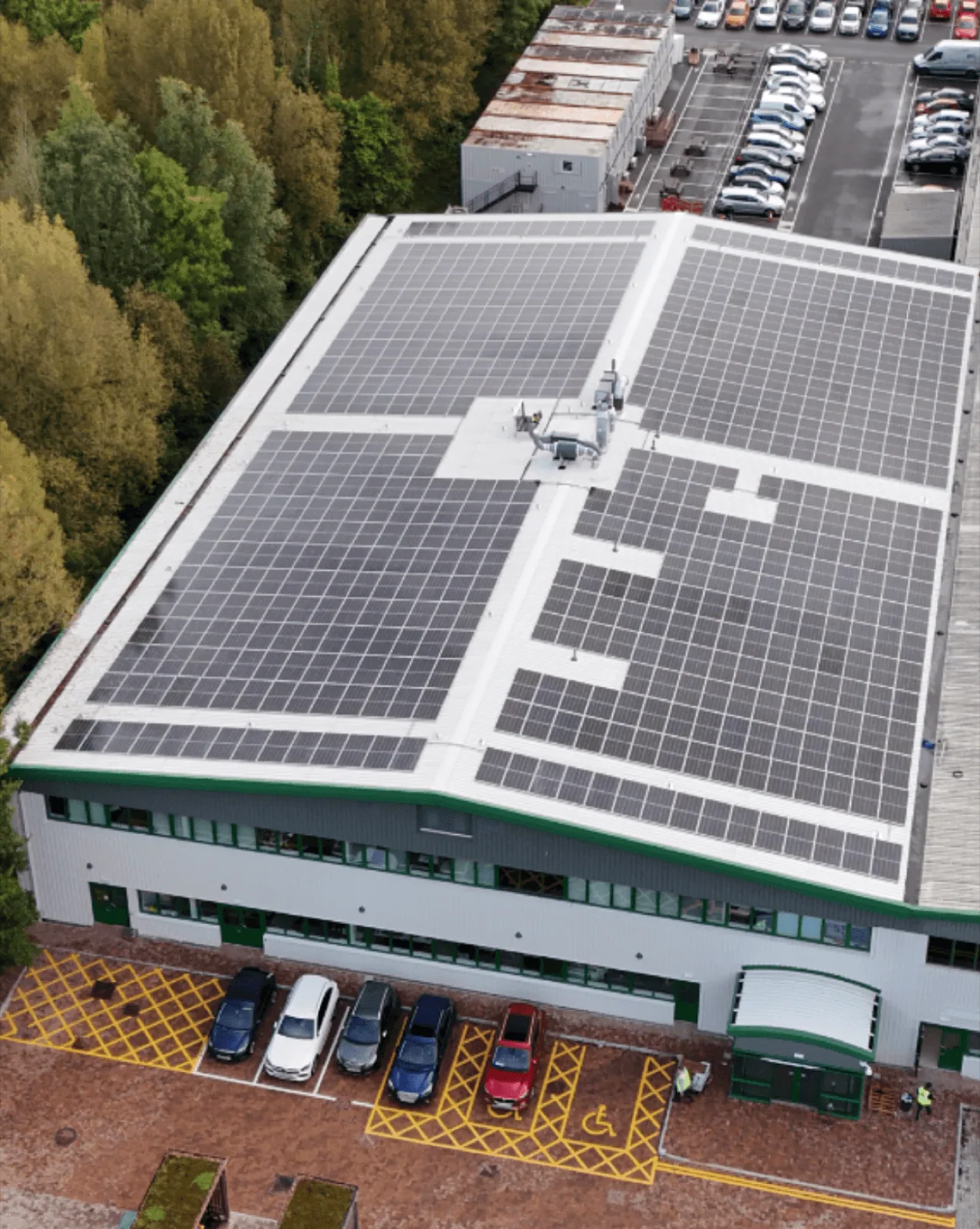
A continuous industrial load a standard installer can't design for.
Recycling and resource recovery sites carry a heavy industrial load profile that takes real engineering to design around — conveyor, shredding and sorting equipment often running near-continuously, layered on top of serious site safety and vehicle-movement constraints.
Continuous process load
Unlike a shift-based manufacturing site, sorting and processing equipment often runs near-continuously, changing the generation-to-demand matching calculation.
Site safety zoning
Heavy vehicle movement and active waste handling create installation and access constraints a standard commercial site doesn't have.
Phased modernisation programmes
Energy infrastructure often needs to fit around a wider, multi-phase site upgrade rather than being delivered as a standalone project.
Environmental and carbon reporting
Reducing imported-electricity consumption can support a facility's carbon reporting, energy-efficiency objectives and wider environmental performance.
The methodology — not just the claim.
- 01
Continuous-process load audit
Half-hourly consumption mapped against your near-continuous conveyor, shredding and sorting operations, not a shift-based commercial curve.
- 02
Demand-curve vs generation-curve gap analysis
Identifying where storage needs to close the gap on a site that rarely stops running.
- 03
Site safety and zoning assessment
Planning installation and access around heavy vehicle movement and active waste handling from the outset.
- 04
Modernisation-programme alignment
Coordinating energy infrastructure delivery with any wider, multi-phase site upgrade already underway.
Problem, solution, outcome.
- 1 · Problem
Crymlyn Burrows Recycling Facility was undergoing a major modernisation programme to improve waste management processes, increase operational efficiency and support wider sustainability objectives. The facility required renewable energy infrastructure capable of reducing reliance on imported electricity while supporting long-term environmental performance.
- 2 · Solution
Nuvolt delivered solar PV as part of the facility's wider modernisation programme, with engineering, procurement and construction managed as one coordinated project alongside the site's other upgrades.
- 3 · Outcome
Reduced reliance on imported electricity, delivered as part of a coordinated site-wide modernisation programme rather than a standalone bolt-on project. Full performance figures are being finalised as the modernisation programme completes.
We've done this before.
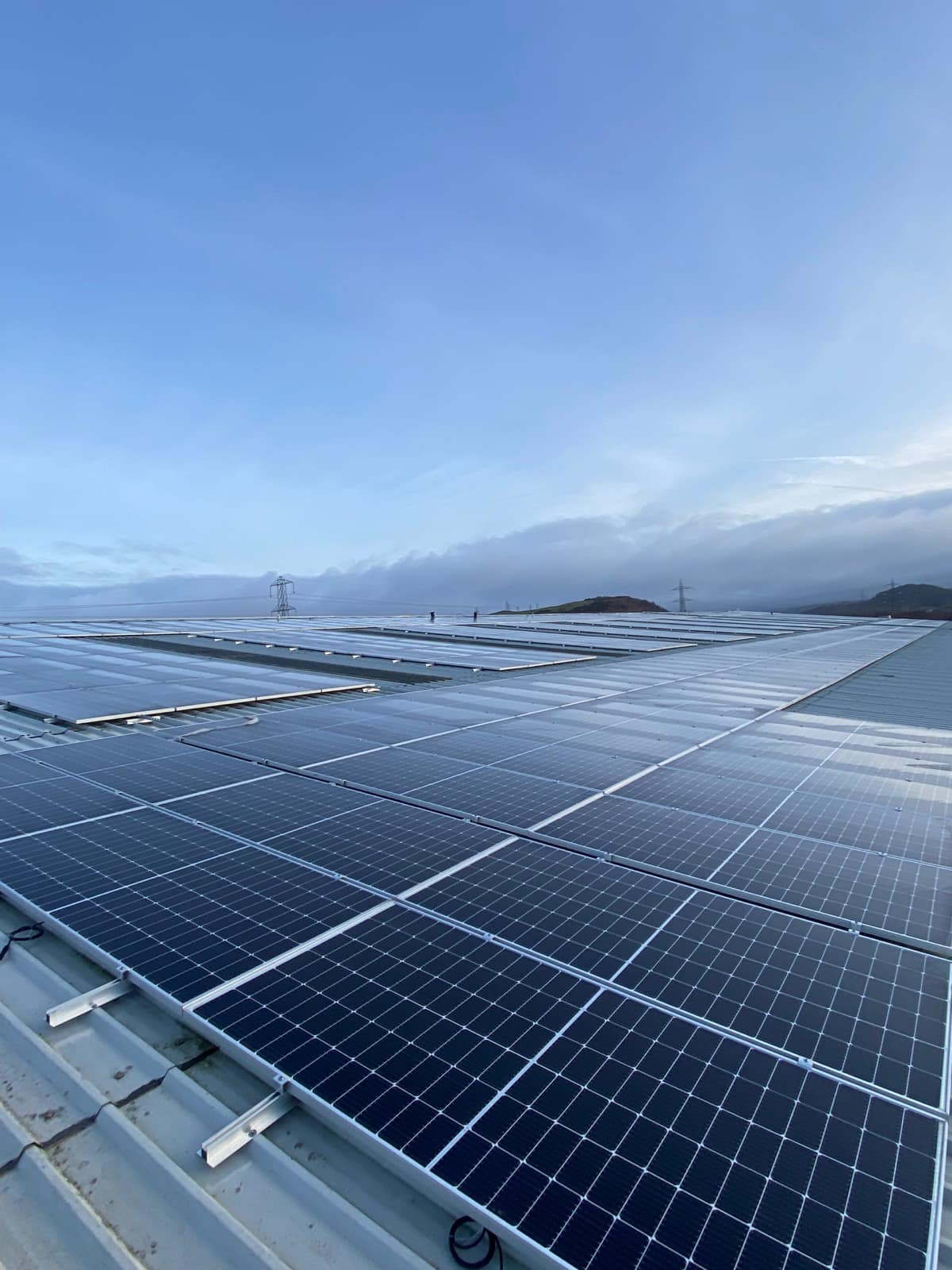
Solar PV engineered and delivered through full EPC as part of a major site modernisation programme, reducing reliance on imported electricity.
The commercial upside, in plain terms.
Sized to near-continuous process load
Generation and storage matched to conveyor, shredding and sorting equipment that runs around the clock, not a shift-based curve.
Delivered around site safety zoning and vehicle movement
Installation and access planned around active waste handling and heavy vehicle movement, not the installer's preferred schedule.
Fits a phased modernisation programme
Energy infrastructure sequenced into a wider, multi-phase site upgrade rather than delivered as a disconnected project.
Supports environmental and carbon reporting
Reduced imported-electricity consumption that can support carbon reporting, energy-efficiency objectives and wider environmental performance.
Full EPC, one accountable partner
Engineering, procurement and construction under one contract on a technically demanding industrial site.
Peak management and energy shifting
Battery storage sized to shift generation into higher-demand periods and manage peak process loads, rather than simply matching a flat 24/7 profile.
Benefit statements are illustrative of Nuvolt's engineering approach. Project-specific figures are modelled against your own site data; sector statistics are drawn from the third-party sources cited on this page.
How we deliver it, end to end.
One accountable partner across the whole engagement — from the first load audit to lifetime operation.
A line for every role that has to sign this off.
Finance Director / CFO
A funding structure that fits within a wider, often multi-phase modernisation programme's capital planning, rather than requiring a separate funding decision.
Operations Director
Installation planned around active waste handling, heavy vehicle movement and site safety zoning, delivered by a partner experienced in industrial-scale process environments.
Sustainability Lead
Reduced imported-electricity consumption that supports carbon reporting, energy-efficiency objectives and wider environmental performance, not just a voluntary target.
Managing Director
One accountable partner for a technically demanding site, integrated into the wider modernisation programme rather than a standalone, disconnected project.
Suited to this sector.
Funding gets equal weight to engineering. The right structure follows the business, not the other way round.
Recycling and resource recovery facilities undergoing modernisation often fund energy infrastructure as part of the same capital programme — CapEx or asset finance aligned to the wider project — though Energy-as-a-Service remains available where the business prefers to keep the energy investment separate.
The objections we hear most.
The questions every recycling & resource recovery team puts to us before a first conversation — answered straight.
Still have a question? Talk to us
System sizing for a recycling or resource recovery facility is driven by continuous process load and site safety constraints, not roof area alone.
Ranges are illustrative of Nuvolt's engineering approach and must not be read as a quote, estimate or guarantee. Every site is sized against its own data.
- 1Continuous conveyor, shredding and sorting loads create a demand profile closer to 24/7 manufacturing than a standard commercial site.
- 2Site safety zoning and heavy vehicle movement need to be factored into both design and installation scheduling from the outset.
- 3Where energy infrastructure is part of a wider modernisation programme, coordinating timelines with other site upgrades avoids costly rework.
A short conversation. No quote, no pitch — a commercial view of where your recycling or resource recovery site's energy position actually sits.
Request a continuous-load and site-safety review. We'll assess how solar fits your processing pattern and any wider modernisation programme already underway — no quote, no pitch, a genuine read on where your energy position sits before any system size gets discussed.
- 1Share your half-hourly consumption data — or we'll help you request it from your supplier.
- 2We map your continuous demand curve against generation potential, alongside site safety zoning and vehicle movement.
- 3You get a commercial read on your energy position and how it fits any modernisation programme — before any system size is discussed.
Let's have a strategic conversation about your energy position.
An assessment, a benchmark, a roadmap — whichever is most useful. A short conversation with engineers who run commercial energy every day, not a sales call.