

Salary-sacrifice EV volumes are up 125% year-on-year.
BEVs are now nearly a quarter of new car registrations — and meeting the workplace charging demand that creates takes a deliberate power strategy, designed in rather than bolted on.
EV charging and energy infrastructure engineered around staff, visitor and fleet needs at a live corporate headquarters — built for the Finance Directors, Facilities Managers and Sustainability Leads in financial and professional services.









What the numbers say about financial & professional services right now.
69,439 Workplace Charging Scheme socket installations have been funded since 2016 (grant rising to £500/socket from Apr 2026).
Source: DfT / OZEV
Battery-electric vehicles reached 23.4% of new UK car registrations in 2025.
Source: SMMT
Salary-sacrifice volumes rose ~125% year-on-year to 226,663 cars in 2025, with EVs 77% of new salary-sacrifice deliveries in Q4 2025.
SECR requires large UK companies to report energy use, GHG emissions and at least one intensity ratio, for financial years starting on or after 1 April 2019.
Figures are third-party sourced and current at time of publication. Each links to its original source above.

In this sector's language.
The pressures a financial & professional services team actually voices — not the ones a brochure assumes.
"We've committed to Net Zero but have no commercial roadmap"
ESG reporting to investors and corporate clients has to be backed by real infrastructure.
"EV adoption among our staff is outpacing our facilities"
Demand for workplace charging is growing faster than most office buildings were designed for.
"We've had three quotes — none of them join up"
Access control, load balancing and hardware selection are usually quoted separately, with no one accountable for how they interact.
"Our building's energy use is modest, but our energy risk isn't"
Office demand is lower than industrial or hospitality, but exposure to volatile rates and ESG risk is just as real.
Where does your site actually sit?
Five quick questions. No form, no number to chase — a directional read on your real constraint, and the fastest route in.
Which of these sounds most like you?
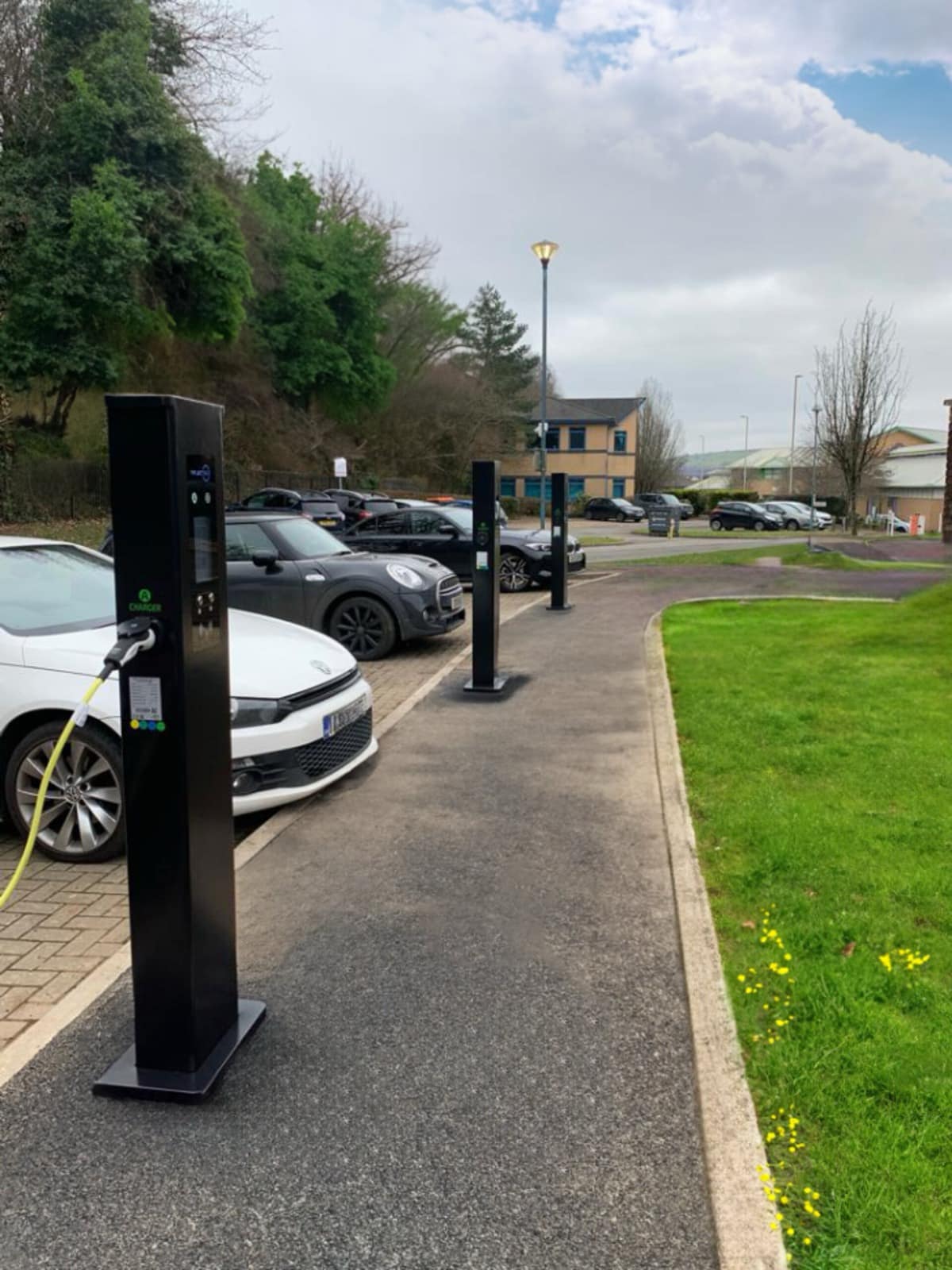
A different energy profile from most of this hub.
Corporate HQ and professional services sites carry a different energy profile from most sectors in this hub — modest baseline consumption, but a fast-growing, technically specific demand for staff and visitor EV charging.
Load balancing across multiple chargers
A shared or constrained electrical supply needs charging infrastructure engineered to share capacity intelligently.
Access control
Staff, visitor and fleet charging typically need different access rules, which most standard EV installations aren't designed to handle.
Building management system integration
Office buildings are more likely to already have BMS infrastructure that a new energy system needs to work alongside.
Leased vs owned premises
Many professional services buildings are leased, which changes who can approve and fund infrastructure investment.
The methodology — not just the claim.
- 01
Usage and access-pattern audit
Mapping staff, visitor and fleet charging demand against existing electrical capacity and building occupancy patterns.
- 02
Load-balancing gap analysis
Identifying how many charge points existing capacity can genuinely support, and where load balancing extends that without a costly supply upgrade.
- 03
Access control and BMS integration assessment
Planning staff/visitor/fleet access rules and building management system integration before installation, not after usage conflicts appear.
- 04
Integrated design and phased delivery
Charging infrastructure designed around how the building is actually used, delivered with minimal disruption to a live workplace.
Problem, solution, outcome.
- 1 · Problem
Creditsafe wanted to support its sustainability objectives by providing EV charging facilities for staff and visitors at its UK headquarters in Caerphilly. The challenge was delivering a solution that would be reliable, easy to manage and flexible enough to support different user groups.
- 2 · Solution
Nuvolt delivered a 22 kW EV charging installation with load balancing and closed-group access control, engineered to support different user groups from a single system.
- 3 · Outcome
A reliable, easy-to-manage charging solution supporting staff and visitor EV adoption at Creditsafe's UK headquarters, with access control built in from the start.
We've done this before.
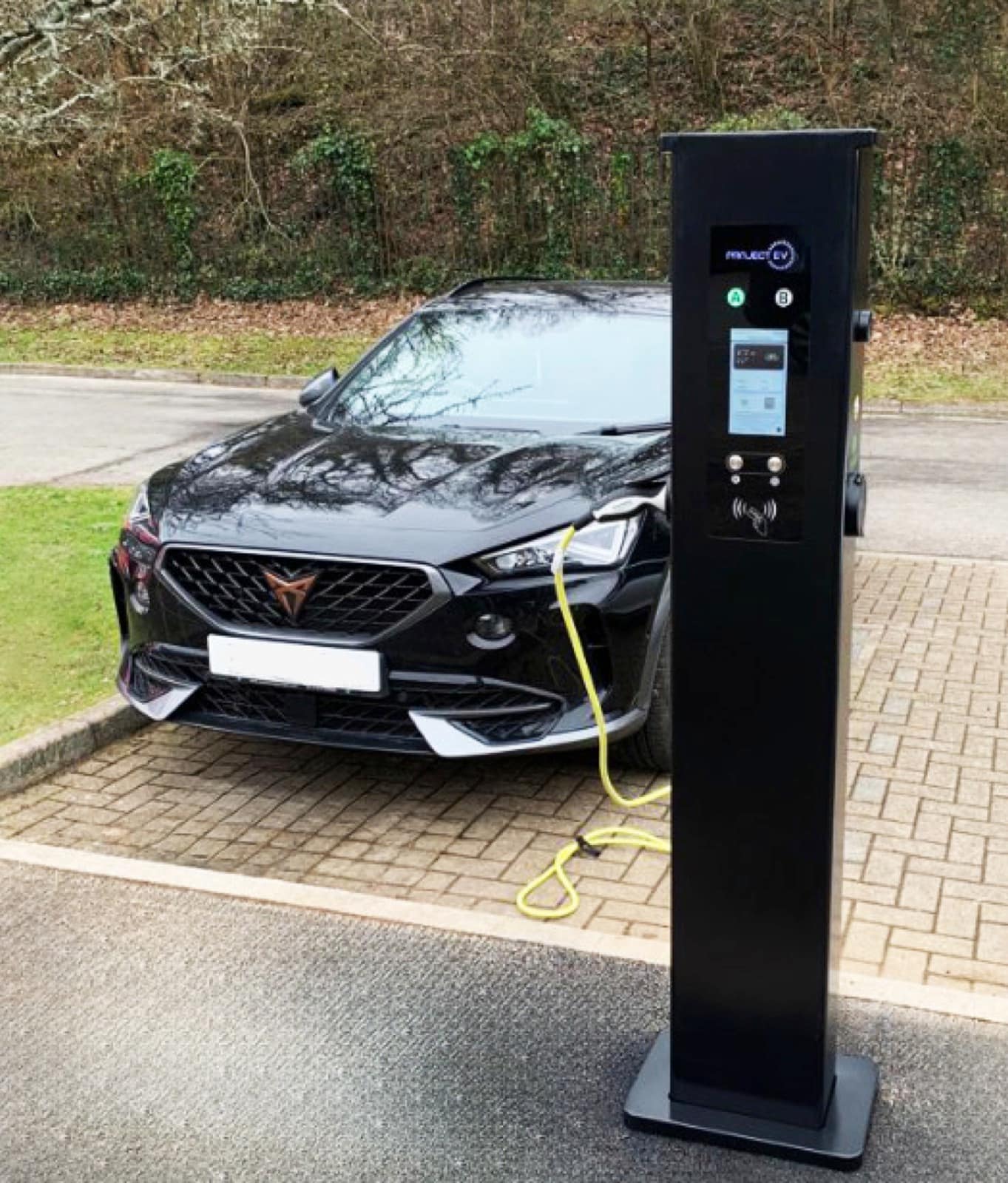
22 kW staff and visitor EV charging with load balancing and closed-group access control at a live corporate headquarters.
The commercial upside, in plain terms.
Workplace charging that keeps staff
As salary-sacrifice EV uptake grows nationally, on-site charging can become a retention factor at many workplaces, not just a perk — though the demand still needs assessing site by site.
Load-balanced so you don't overload supply
Multiple chargers share available capacity intelligently, extending what your existing supply can support.
Access control for staff, visitor and fleet
Different user groups get different access rules from a single system, built in from the start.
Lower-CapEx, high-visibility ESG win
A smaller capital decision than most sectors in this hub, with visible sustainability impact for staff and clients.
Backs SECR and investor reporting
Where SECR applies to your organisation, real operating infrastructure sits behind the energy and emissions figures your reporting has to stand behind.
One partner, ongoing management not just install
Accountable for how the system is used over its life, not a hardware vendor who walks away at handover.
Benefit statements are illustrative of Nuvolt's engineering approach. Project-specific figures are modelled against your own site data; sector statistics are drawn from the third-party sources cited on this page.
How we deliver it, end to end.
One accountable partner across the whole engagement — from the first load audit to lifetime operation.
A line for every role that has to sign this off.
Finance Director / CFO
A funding structure appropriate to a lower-CapEx infrastructure decision than most sectors in this hub, with a clear cost-benefit case for staff retention and ESG reporting.
Operations Director
Installation and access control designed around how staff, visitors and any fleet vehicles actually use the building.
Sustainability Lead
ESG infrastructure that backs up investor and corporate-client reporting with something real and operating.
Managing Director
One accountable partner for a growing category of workplace infrastructure risk, rather than a hardware vendor with no responsibility for how it's used.
Suited to this sector.
Funding gets equal weight to engineering. The right structure follows the business, not the other way round.
EV charging infrastructure at this scale is typically a smaller capital decision and often sits comfortably within CapEx or asset finance, though Energy-as-a-Service routes are increasingly used where an operator wants to avoid the funding conversation.
The objections we hear most.
The questions every financial & professional services team puts to us before a first conversation — answered straight.
Still have a question? Talk to us
Sizing for a corporate HQ is driven by staff and visitor charging demand and existing electrical capacity, not building floor area.
Ranges are illustrative of Nuvolt's engineering approach and must not be read as a quote, estimate or guarantee. Every site is sized against its own data.
- 1Load balancing lets more charge points share existing capacity than a naive one-charger-one-circuit approach would allow.
- 2Access control (staff / visitor / fleet) should be designed in from the start, as at Creditsafe, rather than retrofitted.
- 3Where the building already has a BMS, new charging infrastructure should integrate with it rather than run as a separate, unmonitored system.

A short conversation. No quote, no pitch — a clear view of what your building's charging demand actually needs.
Request a workplace charging capacity review. We'll assess your building's existing electrical headroom and map out what staff, visitor and fleet charging actually needs.
- 1Share your building's electrical details and expected charging demand — or we'll help you establish existing headroom.
- 2We map staff, visitor and fleet charging needs against your existing capacity and any BMS already in place.
- 3You get a clear read on what your supply can support and where load balancing extends it — before any hardware is specified.
Let's have a strategic conversation about your energy position.
An assessment, a benchmark, a roadmap — whichever is most useful. A short conversation with engineers who run commercial energy every day, not a sales call.