Commercial solar in Cardiff
Engineered, installed and connected by a contractor based in the city — not a national rolling a standard design across your roof.
Indicative system size, savings and payback in under a minute. No sign-up.









Delivered in Cardiff
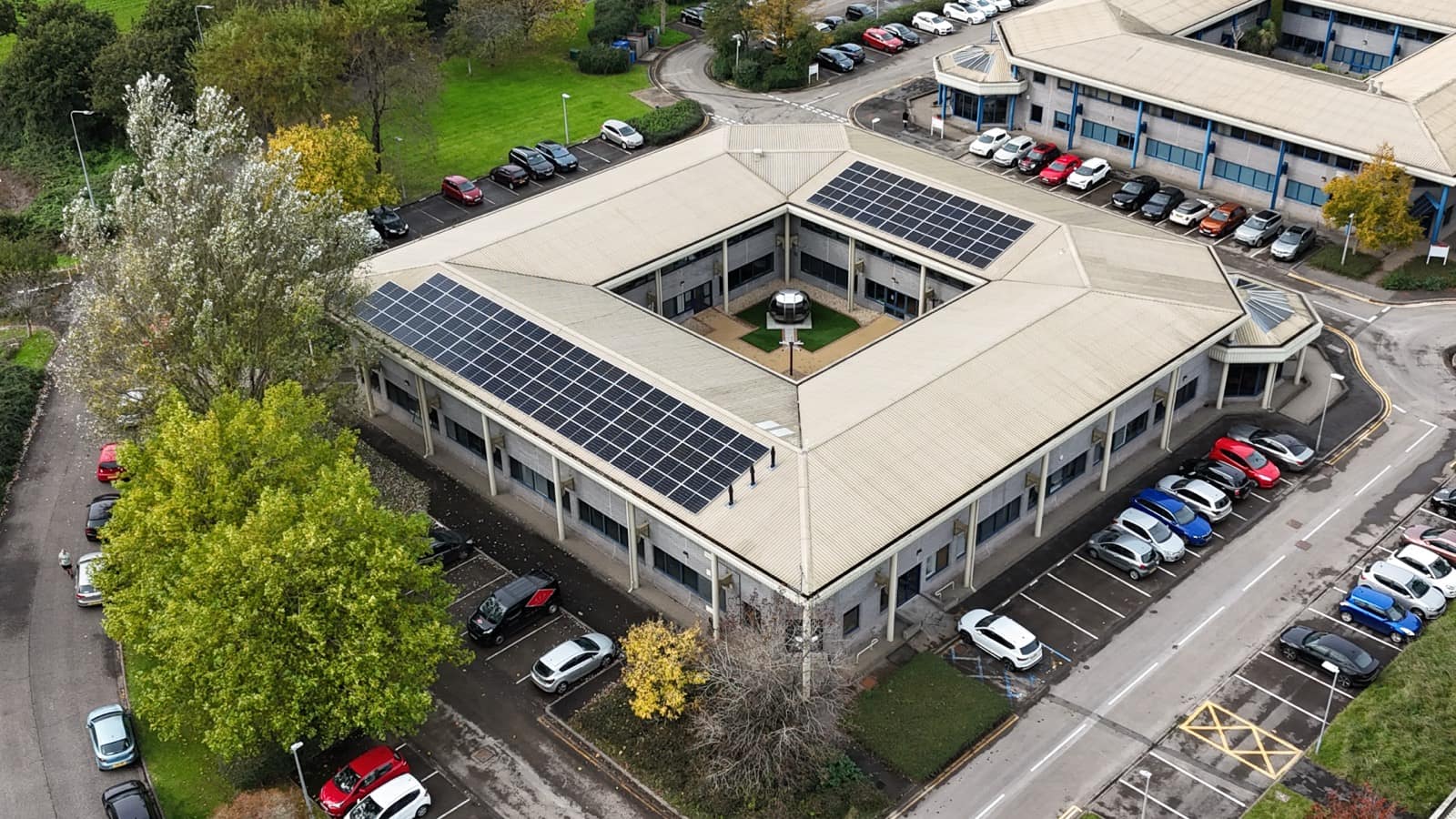
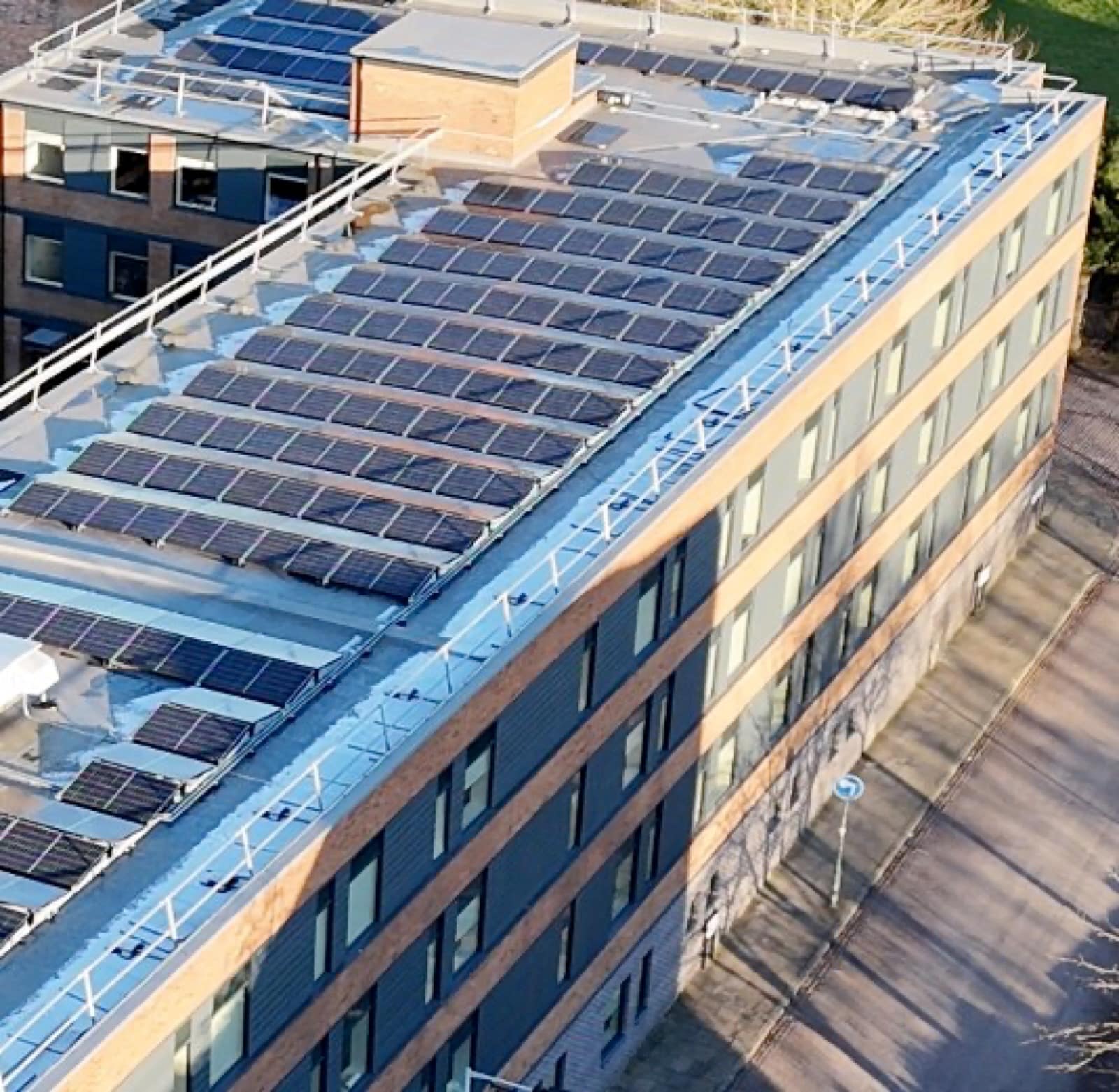
Delivered in Cardiff and across South Wales — including a rooftop system at Quest House in St Mellons, minutes from our own office.
Delivered without disruption. Operating. Measurably saving.
The infrastructure behind a Cardiff scheme
Solar is usually the first question. What actually gets designed depends on how your site draws power, what the incoming supply can take, and what's coming next.
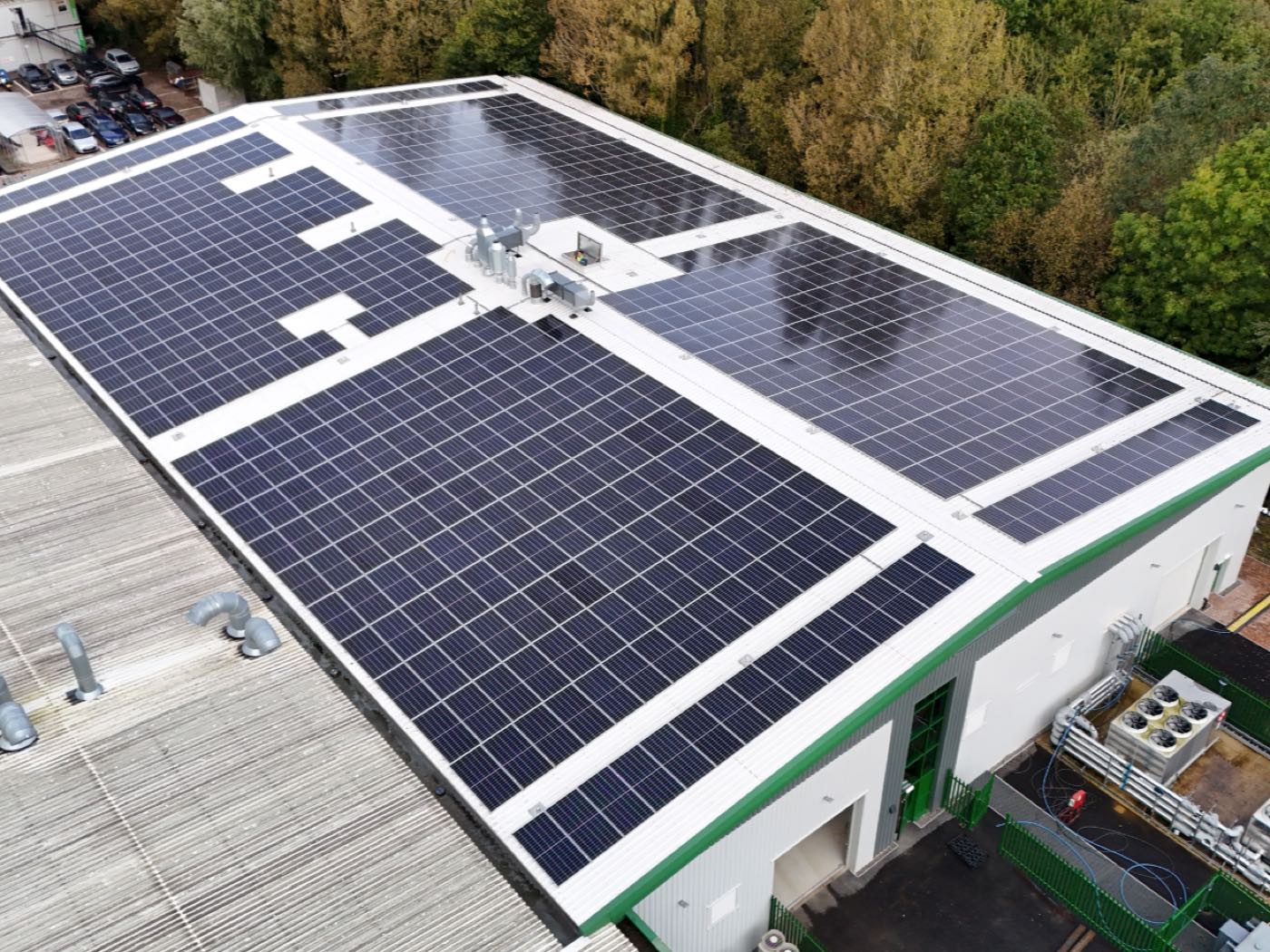
Commercial solar PV
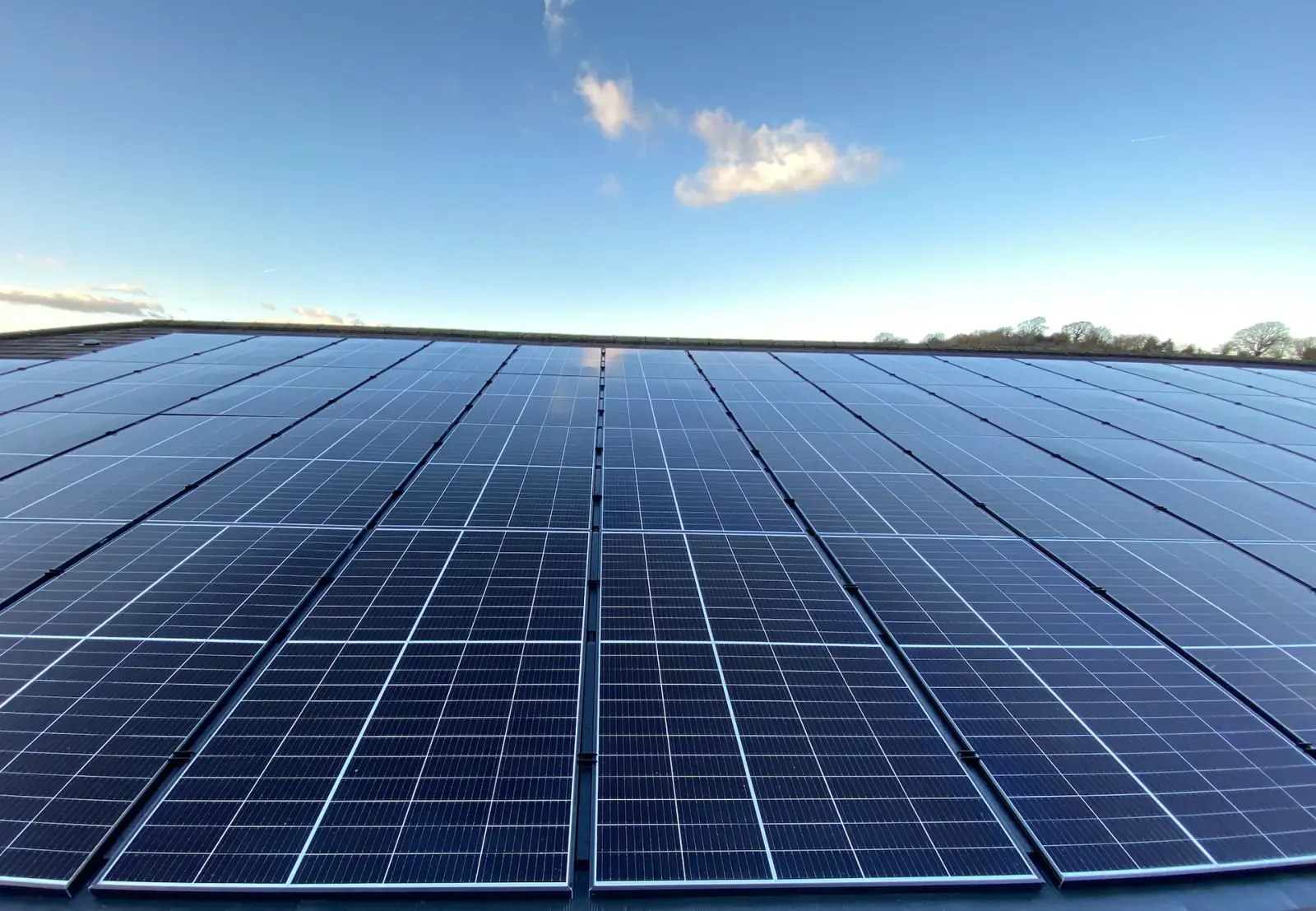
The starting point for most sites. Sized on your half-hourly consumption rather than your roof area, so the generation is used on site instead of exported at a poor rate. Rooftop, ground-mount and canopy — from around 50 kWp to multi-megawatt.
- Structural and electrical design in-house
- PVSyst-grade yield modelling
- G99 application and DNO liaison
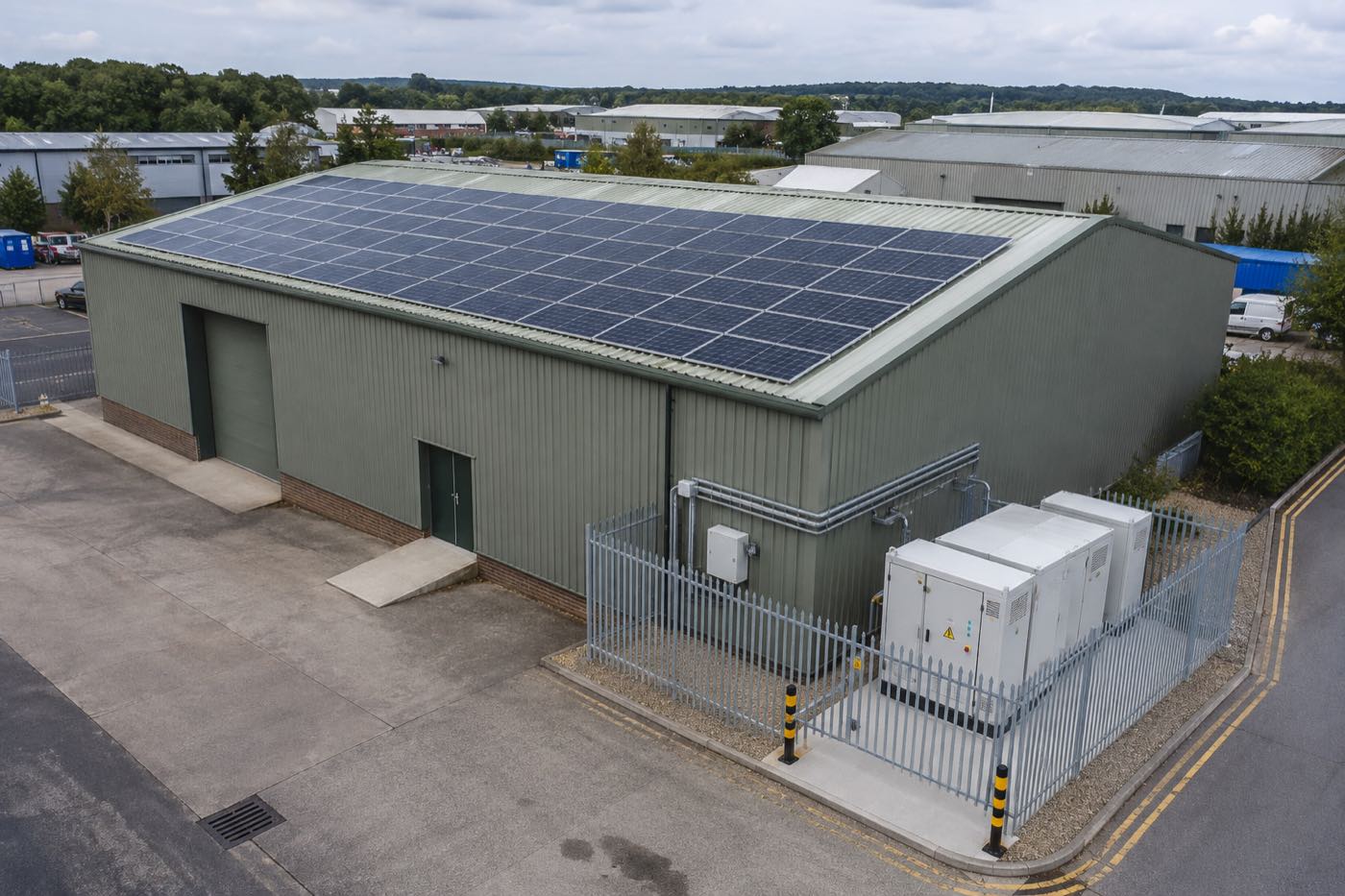
Battery storage
Not automatic, and we will tell you when it isn't worth it. Storage earns its place when it shifts load off expensive periods, keeps generation on site instead of exporting it, or holds up a process that cannot take an outage.
- Modelled against your actual tariff
- Peak-period avoidance
- Resilience where an outage has a real cost
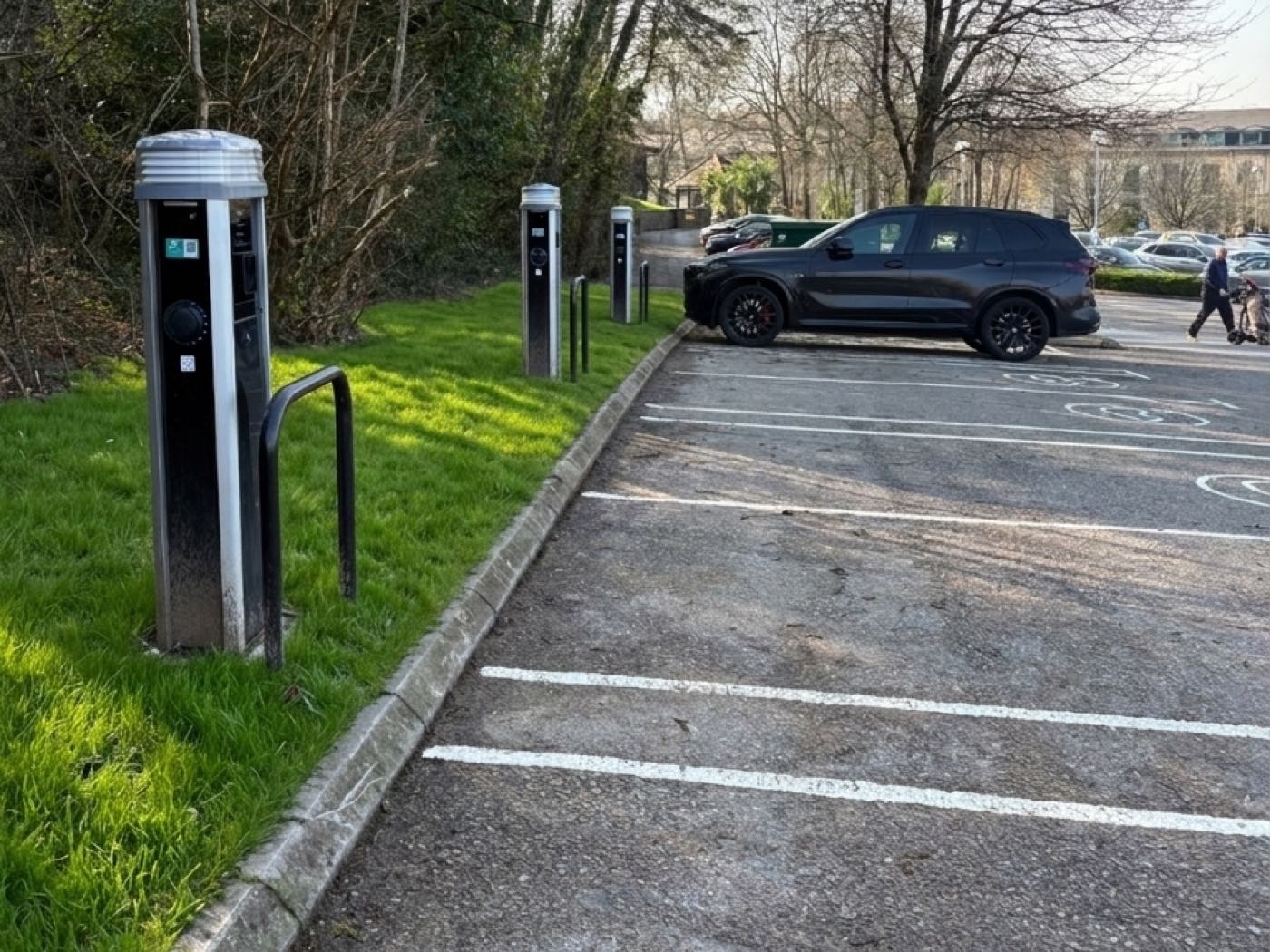
EV charging
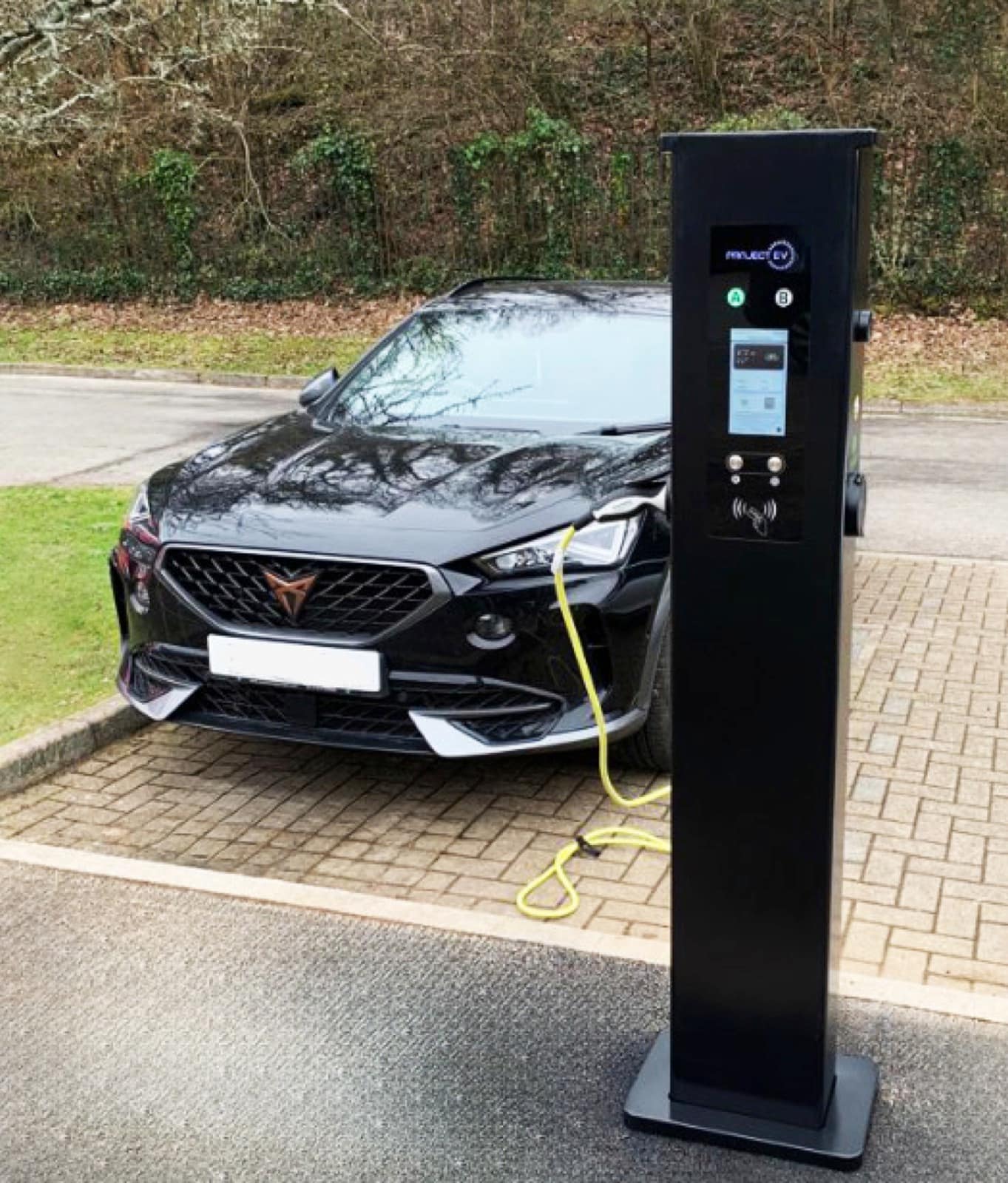
Fleet, staff and visitor charging designed around dwell time and the capacity you actually have. Almost always arrives after the solar — which is exactly why the headroom is worth designing in at the start.
- Load balancing across bays
- Access control and closed groups
- Integrated with on-site generation
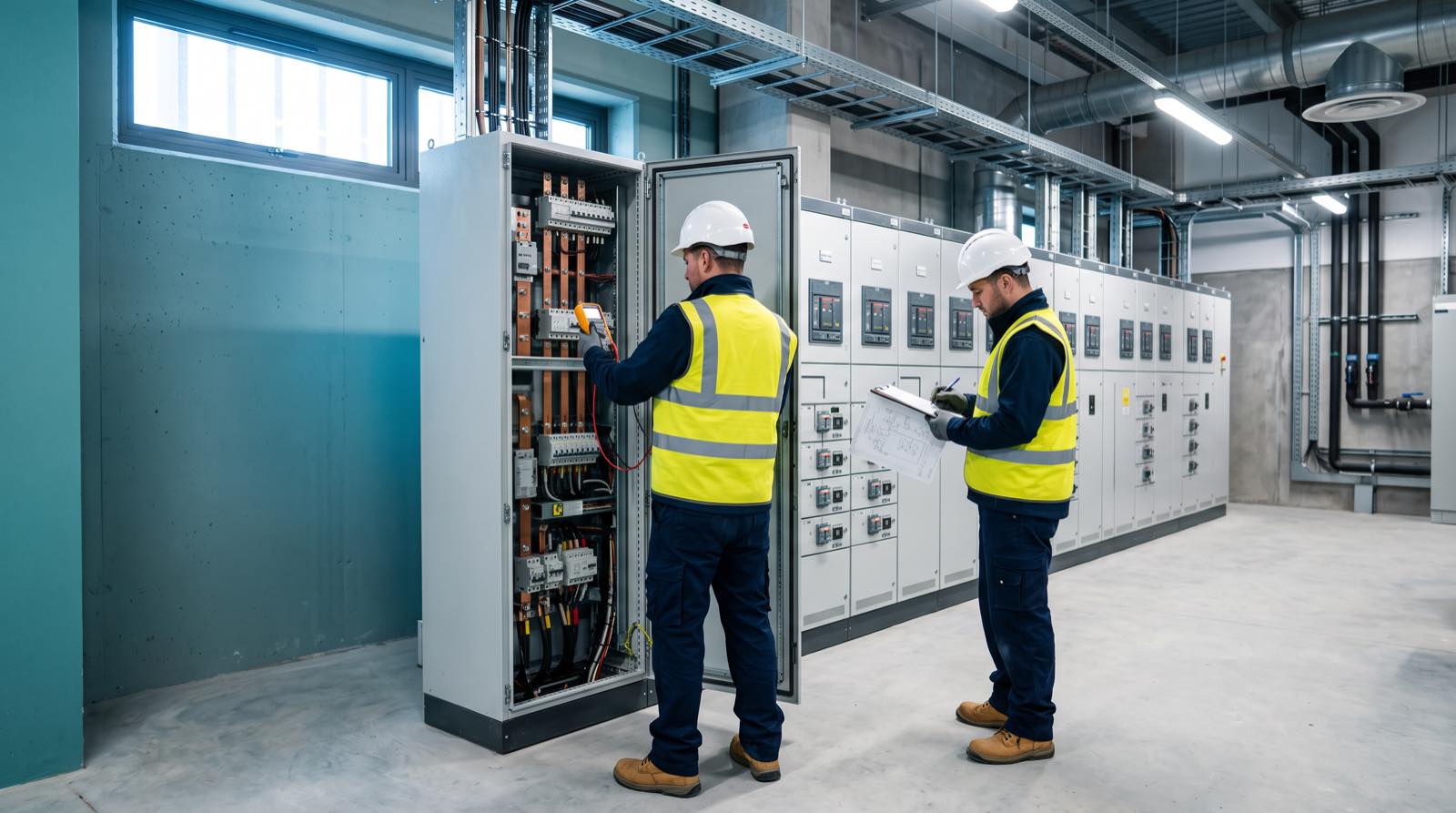
Grid connections, EPC and O&M
The parts that decide whether a scheme happens at all, and whether it still performs in year five. We handle the connection application, act as principal contractor, and maintain the asset against the yield it was funded on.
- G99 / G100 applications and offer negotiation
- Principal contractor on live sites
- Monitoring against the model, not just uptime
You don't have to fund it from capital
Four routes, modelled side by side against your balance sheet rather than pitched. The right one depends on how long you hold the site and what you want on your books — not on what we'd prefer to sell a Cardiff business.
Capital purchase
Buy the asset outright and keep every pound of the saving. Best where you hold the site long term and the capital is available.
Asset finance
Own the asset over time on fixed monthly payments, with the saving usually landing from day one. Spreads the cost without giving up ownership.
Power Purchase Agreement
You buy the electricity, not the asset. A third party funds, owns and operates the system — no capital outlay, a unit rate below grid. This is how the Marston's programme was funded.
Energy-as-a-Service
Zero capital expenditure, a fixed rate below grid and savings from day one, with the asset off your balance sheet. Delivered at Crymlyn Burrows.
What would your Cardiff roof actually do?
System size, generation, savings and payback — modelled on your address in about a minute. No sign-up.
The Cardiff grid reality
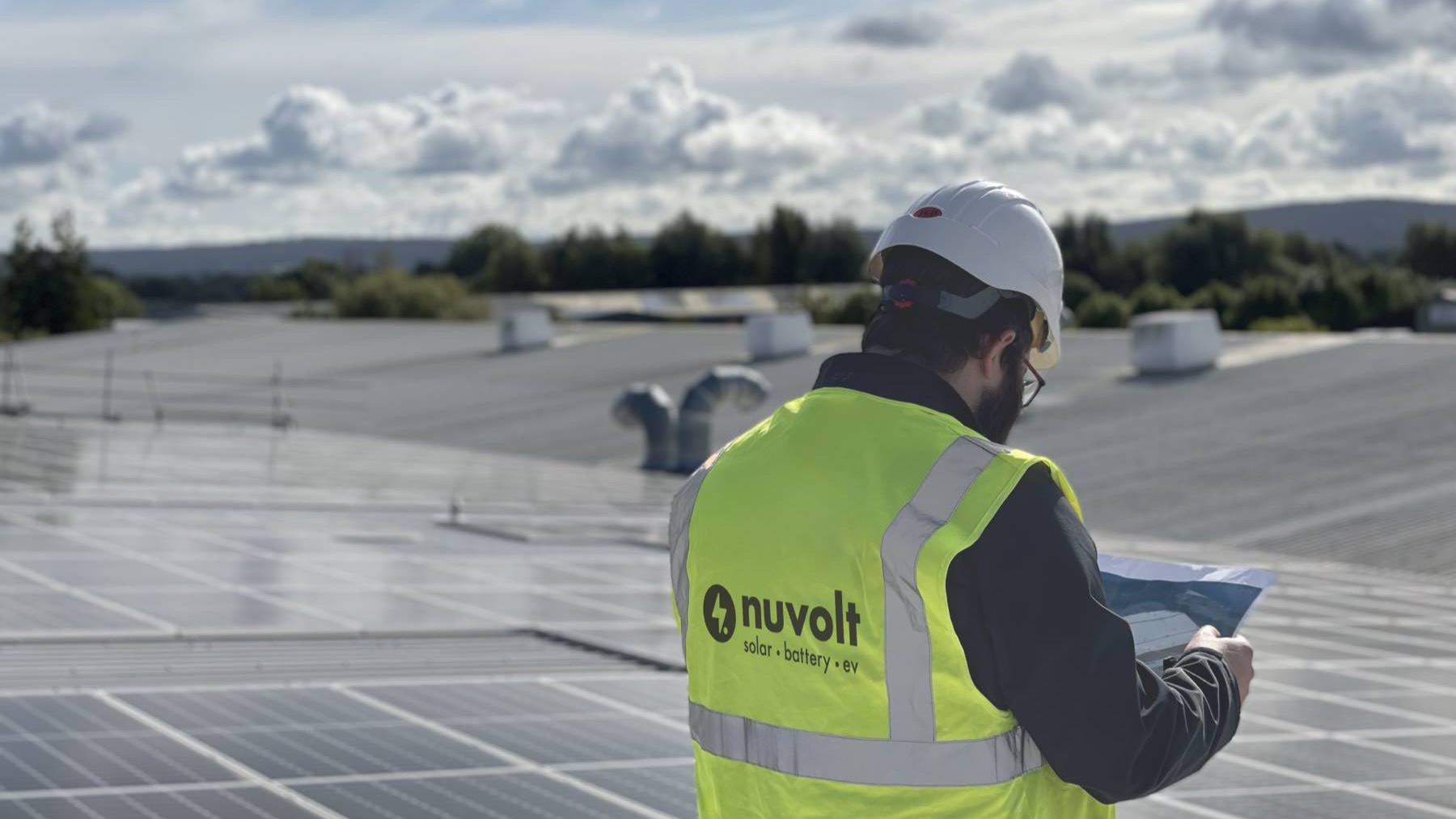
South Wales sits in National Grid Electricity Distribution's licence area — the network operator formerly known as Western Power Distribution. Every commercial connection, capacity enquiry and G99 application here goes through NGED, and the position varies street by street rather than town by town.
Cardiff's commercial stock makes this bite in a particular way. Much of the city's office and light-industrial space sits on supplies sized decades ago for a load profile that no longer exists — and the eastern corridor around St Mellons, Wentloog and Cardiff Bay has absorbed a lot of new demand. Two units on the same estate can return very different answers on available capacity.
This is why we check the connection position before we size anything. Finding out at design freeze that a site cannot export, or that a reinforcement is required, is the most expensive discovery on a commercial solar project — and it is entirely avoidable.
How we handle grid connectionsMost people come to us for solar. Then we look at the whole site.
Solar is usually the first question, and it's rarely the whole answer. Before we size an array we look at what the site actually does — how it draws power, what the incoming supply can take, and what's coming in the next few years. That's what decides whether solar is worth 200 kWp or 800 kWp, and whether it should arrive on its own.
What your half-hourly data really says
Consumption data shows when you actually draw power, not when you assume you do. A site that runs hard overnight gets a different answer from one that peaks at midday — and that changes array size, export exposure and whether storage earns its place.
Whether your supply can take it
Available capacity at the incoming supply decides what can be connected without a reinforcement bill. It's the single most common reason a solar scheme gets re-scoped late, and the cheapest thing in the world to check early.
Storage, where it pays
Battery storage is not automatic. It earns its place when it shifts load off expensive periods, firms up resilience on a site that can't take an outage, or keeps generation on site instead of exporting it cheaply.
EV, before it's urgent
Fleet and staff charging almost always arrives after the solar. Designing the capacity headroom in now costs very little; retrofitting it into a site that's already at its limit costs a great deal.
One party accountable
We design, install, connect and maintain. When generation, storage, charging and the grid connection all sit with one contractor, nobody gets to point at somebody else when a commissioning date slips.
Funded, if you'd rather not spend capital
Capital purchase, PPA, asset finance or Energy-as-a-Service. The right structure depends on your balance sheet and how long you hold the site — not on what we'd prefer to sell.
From operators we work with.
“With the support of Nuvolt's expert team, we are moving forward with on-site generation, increasing our renewable energy production. This partnership is a testament to the synergy between our two organisations.”
Welsh funding and policy context
Welsh Government policy under Net Zero Wales pushes harder on non-domestic decarbonisation than the position in England, and the support landscape differs accordingly — from Development Bank of Wales lending through to Ynni Cymru funding for community-scale generation.
Non-domestic rates in Wales are set by Welsh Government rather than Westminster, so the rating treatment of a rooftop installation is a Welsh question and worth taking Welsh advice on. Where a scheme is funded through a PPA or Energy-as-a-Service, the asset's treatment differs again.
Planning in Cardiff
Cardiff Council is the local planning authority. Most commercial rooftop solar on an existing building sits within permitted development, but that changes quickly for listed buildings, for the conservation areas around the civic centre and Cathays, and for anything visible in a designated setting.
Ground-mounted schemes and anything at scale are a different application entirely. We establish which route a site falls under before design, not after.
A commercial site is not a big domestic install
| Typical installer | Nuvolt | |
|---|---|---|
| Grid connection | Treated as paperwork at the end of the job. | Checked at the start, because available capacity decides what's worth designing. |
| Sizing | Fill the roof, or fit the budget. | Sized to your half-hourly load profile, so generation is used on site rather than exported cheaply. |
| Operations | Scaffold goes up, you work around it. | Programmed around trading and production hours — the constraint we design to first. |
| Funding | One price, take it or leave it. | CapEx, PPA, asset finance and EaaS modelled side by side against your balance sheet. |
| Afterwards | Warranty paperwork and a phone number. | Monitoring against the yield model, with O&M and a team an hour away at most. |
Who we work with around Cardiff
Serviced offices & flexible workspace
Cardiff's office stock, much of it multi-tenanted — where metering and landlord-tenant structure decide what's possible.
Public sector & local government
A dense concentration of public estate with hard carbon targets and capital constraints.
Financial & professional services
Reporting-driven organisations that need metered, defensible Scope 2 reduction.
Hospitality & leisure
Venues where the install has to work around trading, not the other way round.
Areas we cover around Cardiff
Our base is Summers House, Pascal Close, St Mellons — inside the city, minutes from the M4. If you're not on this list, ask — it isn't exhaustive.
How a Cardiff project runs
- 01
Site and data review
Half-hourly consumption, roof or land survey, incoming supply capacity and constraints — before anything is sized.
- 02
Engineered design
System size, layout, structural and electrical design, yield modelling and a grid application route that reflects the real connection position.
- 03
Commercial structure
Capital purchase, PPA, asset finance or EaaS, modelled side by side so the numbers are comparable rather than pitched.
- 04
Delivery around operations
Programmed to your trading and production hours. On live commercial sites, disruption is the cost that doesn't appear on the quote.
- 05
Connection and commissioning
G99 application, DNO liaison, witness testing and energisation handled end to end.
- 06
Monitoring and O&M
Performance monitored against the model, with maintenance that keeps the asset generating what it was funded to generate.
Commercial solar in Cardiff, answered
See what your Cardiff site could generate
System size, annual generation, savings and payback — modelled on your address in about a minute. No sign-up, and no obligation to talk to anyone.
Not ready for numbers? Take the six-question opportunity check or talk to the team.
Let's have a strategic conversation about your energy position.
An assessment, a benchmark, a roadmap — whichever is most useful. A short conversation with engineers who run commercial energy every day, not a sales call.